Welcome to hykeychain.com
The exclusive warmth hidden in the corners of the clothes, the insignificant meaning of a custom-made clothing label

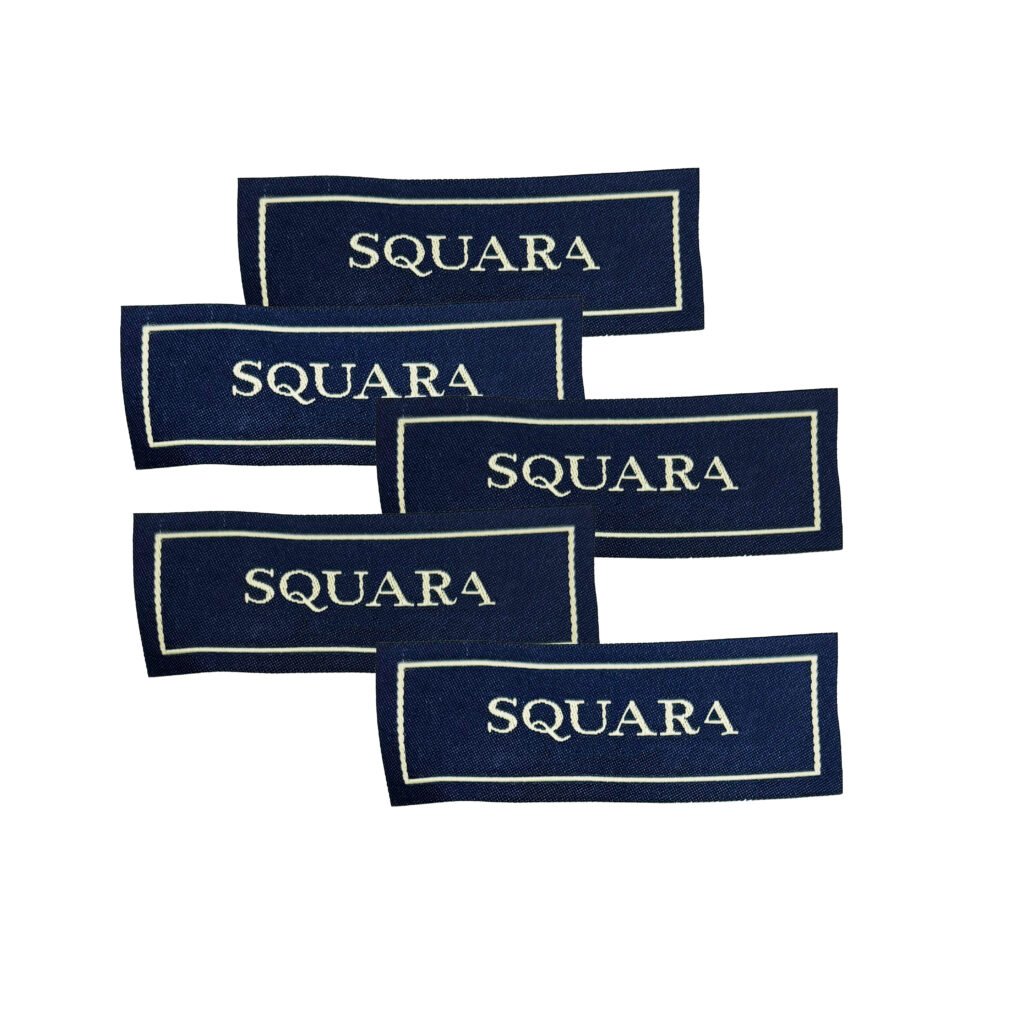
Over the years of buying clothes, I guess not many people would deliberately look at that small fabric tag at the collar opening. Anyway, I definitely never did that before. As soon as I got a new piece of clothing, the first thing I would do was to use a pair of scissors to cut off the label at the back of the collar. Why? It’s itchy! It’s a hard, small strip with rough edges. When it rubs against the back of my neck, it causes an itch after walking just a few steps. It’s so annoying.
Later, I began to come into contact with the clothes of some independent designers and small-scale handmade stores. Then I realized that this kind of thing could actually be so exquisite.
I remember once I found a white shirt with an extremely good fit. The cotton fabric felt like clouds in my hands, and the price wasn’t cheap either. At that time, I was feeling very happy. But when I turned the collar over, oh my god, there were a bunch of blurry letters printed on it. The fabric was as rough as sandpaper. Immediately, half of the refined feeling in my heart vanished. At that moment, I suddenly understood that the “luxuriousness” of a piece of clothing is not necessarily due to the preciousness of the fabric; rather, it is ruined by these invisible details.
A friend who is a fashion designer quipped to me: “These days, the labels on clothes are merely there to inform you about the size and origin – they are minimized as much as possible. But for good clothes, the labels are there to ‘sign’ the garment.”
Later, she gave me two T-shirts she had made herself, so that I could experience the difference. To my surprise, the labels felt soft! They were like a small piece of silk adhering to the skin, completely without any sensation. I turned it over and saw that the font was tiny and very delicate, the color combination was comfortable, and the stitching was so neat that it was beyond description. Just such a small thing gave this originally excellent T-shirt an “exclusive” feeling all its own.
Since then, my perspective on labels has completely changed.
Especially once, when I was making children’s clothing for my kids at home, I did something creative on the custom labels. I didn’t print the size or the brand, but instead wrote a little code that belonged to our family. That day, when the child wore that dress and went out to play, when he took off the clothes and showed them to me, he pointed and said: “Mom, this says I love you.” At that moment, I felt that this piece of clothing was no longer just an industrial product; it became a little secret with a trace of warmth. This feeling was very strange. It was like the clothes were whispering to you, and only you could hear it.
For those who create original works, this small label becomes their pride. Once, on the subway, I saw a girl wearing a dress that looked very similar to the one my friend designed. Curious, I approached her and took a look at the collar. Sure enough, it was that familiar label. That level of recognition is something mass-produced clothing can never offer. It’s not the ostentatious display of a logo, but a low-key “identification”.
Of course, even the most attractive labels are useless if they are uncomfortable. This is why I increasingly dislike universal labels. Those hard plastic, poorly printed labels are literally the enemy of the skin. And custom labels offer more material options. For instance, the satin-like surface of the water-washed labels, or the more luxurious woven fabric. When touched, they all feel soft and thin. Some even have specially softened edges, sewn onto the armpits or neckline. You simply don’t notice their presence.
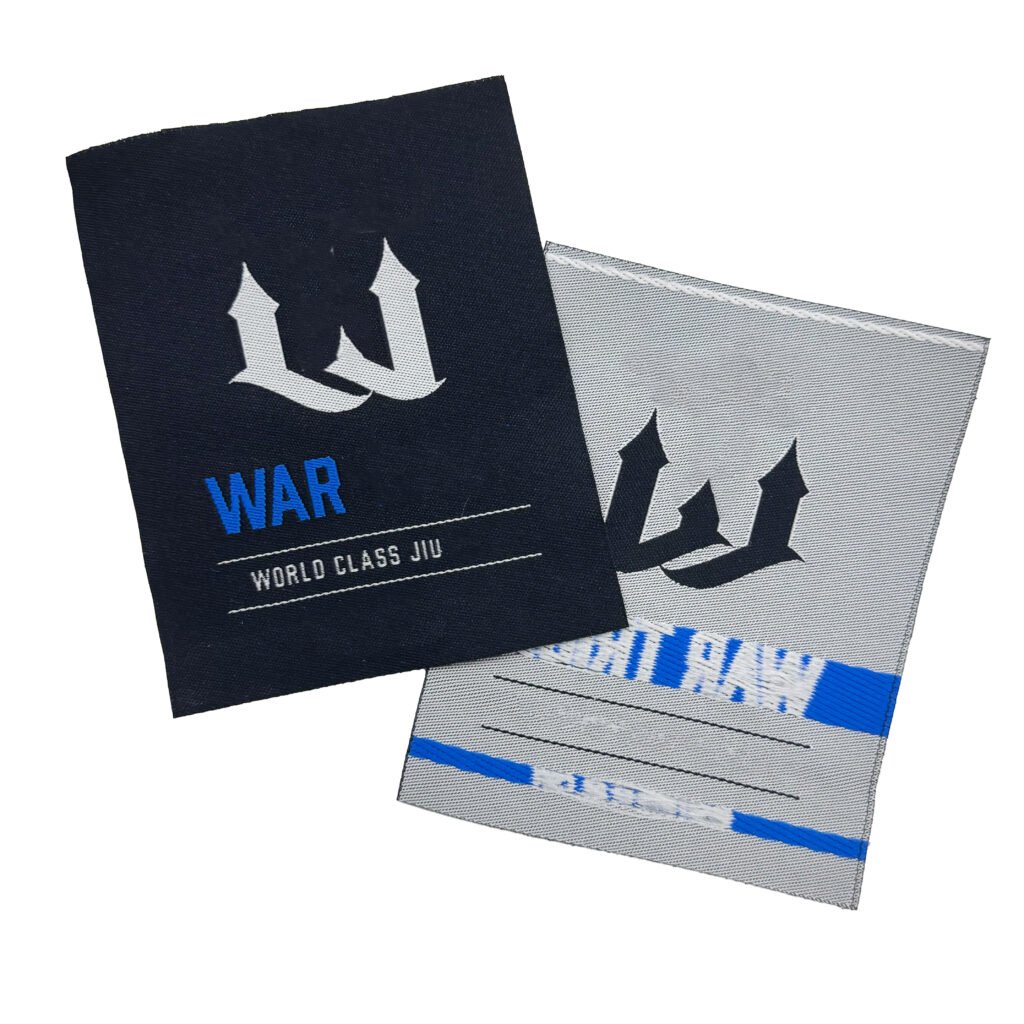
My skin is very sensitive. I used to get allergic reactions whenever I wore new clothes. Now that I’ve switched to this soft fabric, even the scissors have been left unused.
There is another practical issue: durability. My husband is a tough guy. He insists on using the washing machine instead of hand-washing. The ordinary printed labels get blurry after just a few washes, turning the text into a black mess and the edges flaking like a mop cloth. But the custom woven labels are different. The patterns and text are woven in like knitting a sweater, not printed on. I have a hoodie that I’ve been wearing for almost two years and have washed it less than fifty times, yet the label’s patterns remain clear and crisp, and the edges haven’t loosened. The quality is truly durable.
When people hear the word “customization”, they tend to think of it as something that only big brands do, far removed from ordinary people. But that’s not true at all. Nowadays, even individuals can easily customize a few pieces of clothing or make name tags for their children. The process is not complicated either. Choose a material you like, send the words you want to say or the small patterns you have drawn to the manufacturer. They will layout the design for you, confirm it, and then you can have it made. It only costs a few dollars to make dozens of items. The cost is not high, but the joy of “this is my exclusive one” is really hard to describe.
Now I even think that these small labels would be particularly impressive when used on the towels and pillowcases of guesthouses or studios. When guests notice such details, they will think that the owner is meticulous and their trust level immediately increases.
In the end, a label is just the size of a fingernail. Who would notice it if you don’t turn up the collar? But it’s there. It doesn’t make a fuss, doesn’t shout. Every time you change your clothes or every time you touch the back of your neck, it reminds you: This piece of clothing is not one of the countless identical items randomly picked from the assembly line. It’s made especially for you and has a story behind it.
The refinement of life is not necessarily about wearing clothes with large logos, but rather about those tender little details that only you know about. Next time you buy clothes, take a look through them. You might be surprised to find something you like.