Welcome to hykeychain.com
How to Choose Materials for Custom Promotional Products: A B2B Buyer Decision Guide
Compare PVC, acrylic, metal, embroidery and silicone for custom promotional products. Match material, artwork, use case, budget and delivery requirements.

SEO information
- SEO title: Custom Promotional Product Materials: PVC, Acrylic, Metal, Embroidery & Silicone | Heyang Craft
- Meta description: Compare PVC, acrylic, metal, embroidery and silicone for custom promotional products. Use this B2B buyer guide to match material, artwork, use case, budget and delivery requirements.
- URL slug:
custom-promotional-product-material-selection-guide - Suggested schema: Article + FAQPage, after the answers have been reviewed by the site owner.
How to Choose Materials for Custom Promotional Products: A B2B Buyer’s Decision Guide
Introduction
The right material for a custom promotional product is the one that supports the job the item has to do. A trade-show giveaway, retail add-on, staff recognition item and outdoor brand patch can all carry the same logo, yet they need different levels of detail, weight, durability, texture and packaging protection.
Quick answer: choose soft PVC when the design needs molded color, layered relief or a flexible feel; acrylic when lightweight printed detail is the priority; metal when a premium, long-wearing impression matters; embroidery when textile texture belongs to the product; and silicone when a soft, wearable or flexible format is required. Confirm the choice against the artwork, intended use, quantity, destination and packaging before a factory starts tooling or sampling.
This guide is for purchasing teams, promotional distributors and brand managers sourcing custom keychains, patches, magnets, medals and small branded accessories. It does not promise that one material is best in every circumstance. Instead, it explains the practical questions that should be settled before artwork approval.
Start with the use case, not the material name
Buyers often begin with a request such as “we need PVC keychains” or “we want a metal badge.” That is useful direction, but it is not yet a specification. A clearer brief describes what the product will experience after delivery:
- Is it a short-event giveaway, a retail item or a long-term employee accessory?
- Does the artwork rely on fine type, small gradients, raised lines or multiple solid colors?
- Will the item be handled, clipped, worn, washed, attached to luggage or displayed indoors?
- Does it need individual retail packaging, a backing card, a barcode or a mixed gift-set presentation?
- Which appearance or functional details would make the order unacceptable?
Factory teams can make better recommendations when these questions are visible at the start. For example, a small mascot with bold color separation may suit molded PVC well. A photo-like illustration with tiny text may be more practical as a printed acrylic item. A corporate anniversary gift may justify metal construction and a defined plating finish. The goal is to make the material fit the application rather than force the application to fit a catalogue item.
PVC: flexible shape, color blocks and molded dimension
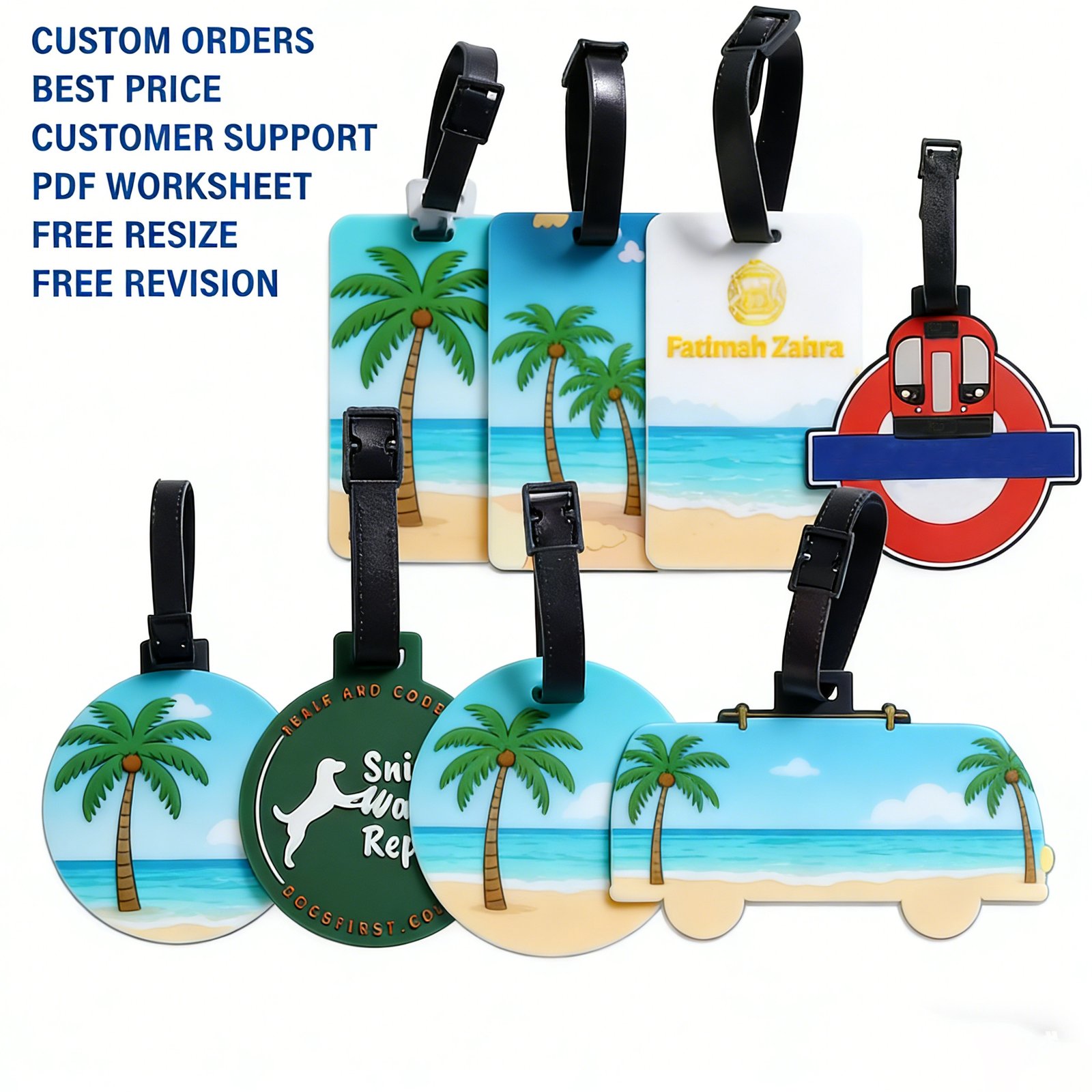
Soft PVC is commonly selected for custom shapes, bold outlines and raised or recessed artwork. It can suit keychains, luggage tags, patches, magnets, coasters and bottle openers. The visual strength is its dimensional construction: an outline, base layer and color fills can be planned as separate areas rather than as a flat print.
PVC works especially well where the design has clear color zones, a mascot silhouette or a tactile brand element. It is less forgiving when the artwork contains extremely small type or very close color differences; those details need review at actual product size before a mold is made. Buyers should provide vector artwork where possible, identify brand colors, confirm intended dimensions and decide whether a flat 2D or more sculpted 3D effect is needed.
During sample review, check the outline sharpness, color separation, attachment hardware, overall thickness and any magnet or hook-and-loop fit. A visual approval alone is not enough if the item will be pulled, flexed or used outdoors.
Acrylic: lightweight, printed detail and clear or opaque effects
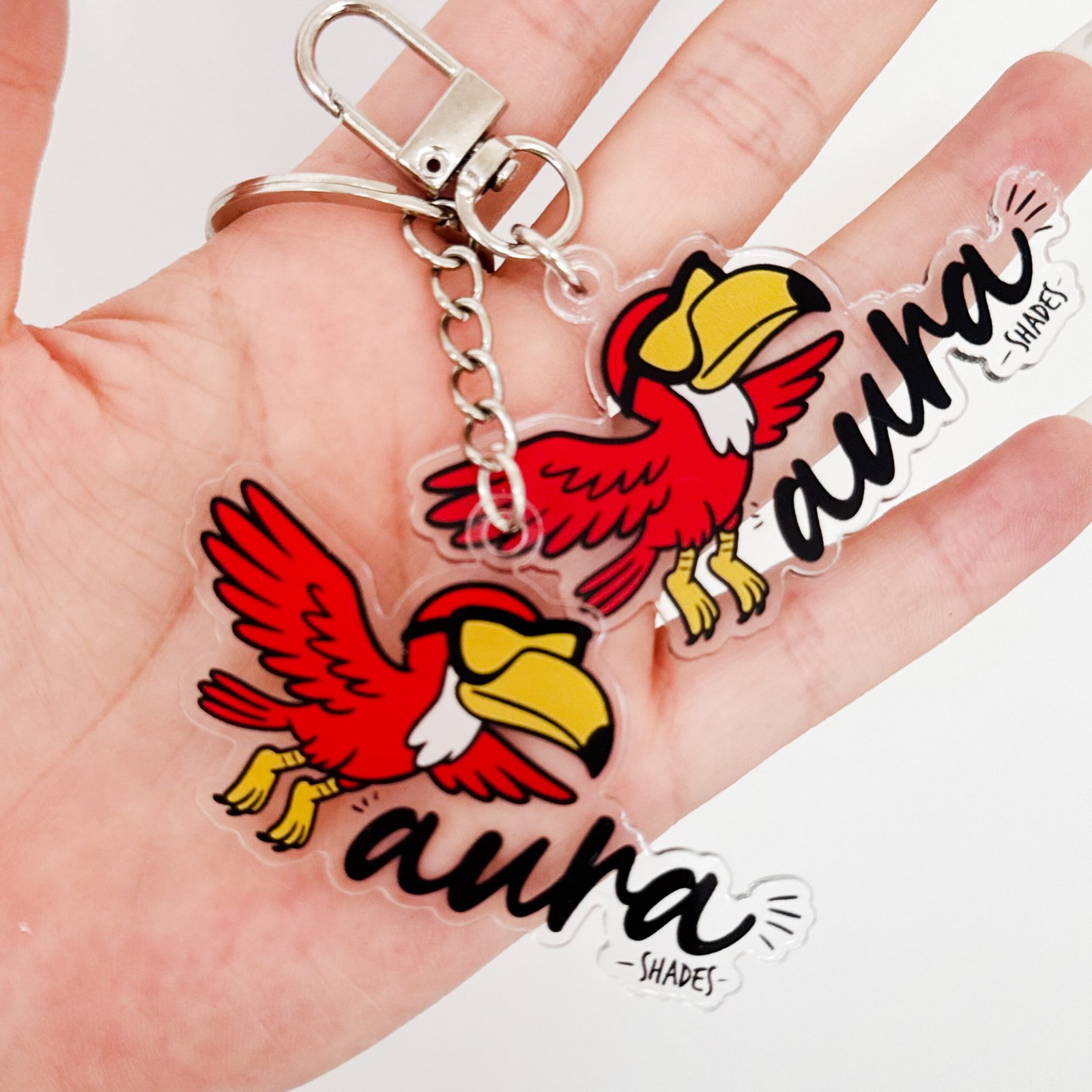
Acrylic is useful when the artwork depends on detailed printing, transparent areas or a clean flat profile. It is often chosen for illustrated keychains, character merchandise, event badges and lightweight retail accessories. A clear, frosted, mirrored or opaque base can change how the same design reads.
Before production, confirm whether printing is single- or double-sided, whether the artwork needs a white backing layer, the protective-film arrangement and the edge finish. Fine details should be reviewed at final size, not only on a large screen. For a product that will travel in bulk, packaging should be considered early because scratches and surface marks can become a larger risk than the printed design itself.
Metal: weight, finish and a premium perceived value
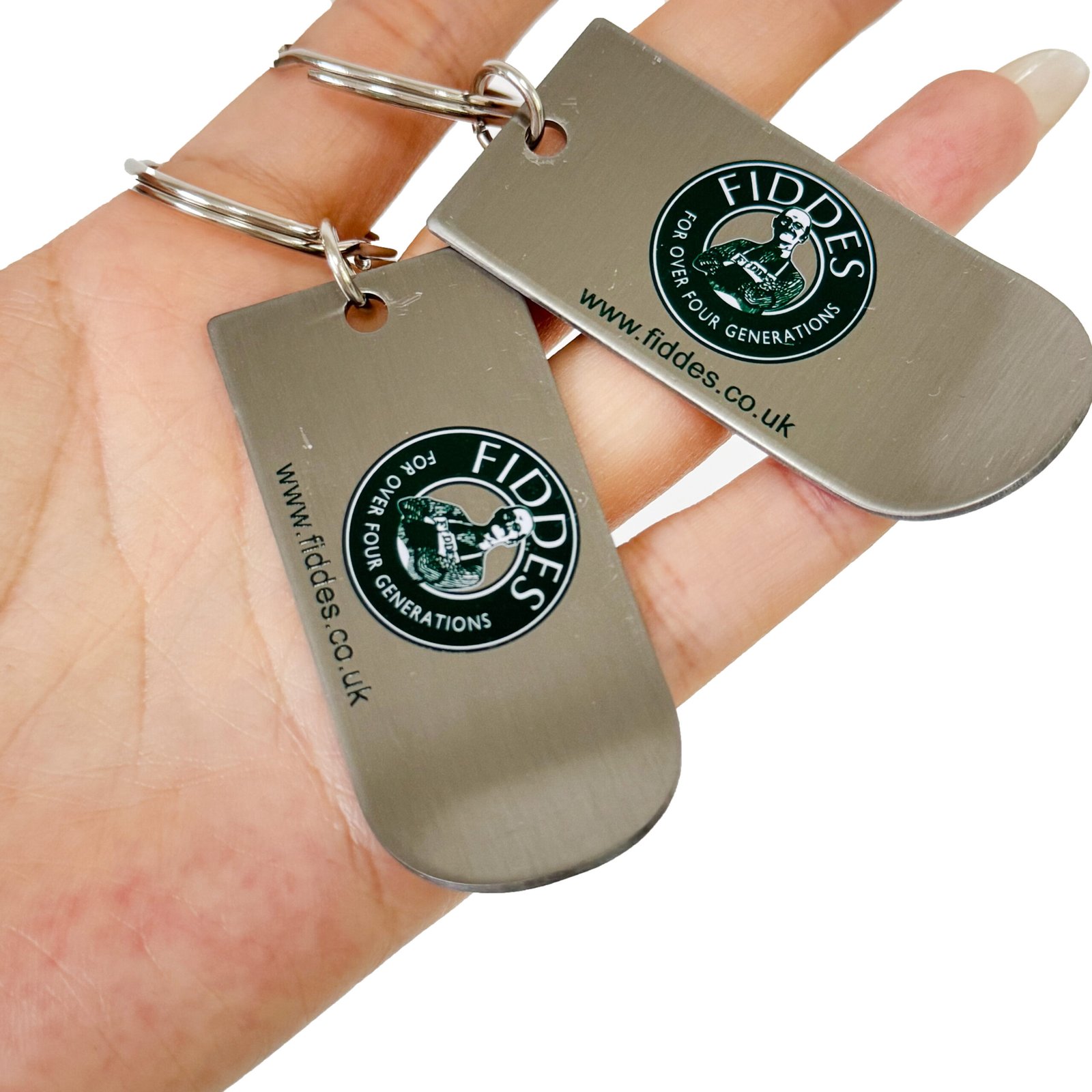
Metal keychains, pins, medals and badges are suitable when the product needs a durable, premium or commemorative character. The decision is not simply “metal versus plastic.” Die casting, stamping, engraving, plating, paint-fill areas and attachment construction all affect the quotation, sample route and final appearance.
Ask the supplier to identify the base material, finish, logo method and any protective coating in the quote. For plated parts, an approved sample should show the actual finish, not only a digital rendering. For a keychain, check the ring, chain and connector as well as the main emblem. For a medal, confirm ribbon attachment, edge condition and packaging. Shipment inspection should look for surface marks, incomplete fills, sharp edges, inconsistent finish and hardware movement.
Embroidery: textile texture and garment compatibility
Embroidered, woven, chenille and sequin patches introduce texture that a molded or printed item cannot duplicate. They are relevant for apparel, caps, bags, club merchandise and textile-oriented promotional programs. The important choice is usually not just the stitch style; it is the backing and attachment method.
An embroidered patch can use sew-on, iron-on, hook-and-loop or adhesive-backed construction depending on the product application. Artwork review should identify small lettering, fine gaps, border type, thread colors and finished dimensions. Installation preparation matters: the receiving team should know whether the patch is intended to be sewn, pressed or attached to a matching loop surface. For repeat orders, retain the approved thread references and backing specification with the artwork record.
Silicone and webbing: soft contact and practical carry
Silicone is appropriate for flexible wristbands, strap-style keychains and soft tactile accessories. Webbing keychains and lanyard-style products are useful where carrying, hanging or repeated handling is part of the use case. These products should be judged as constructions, not only as printed surfaces.
Review the strap width, material feel, edge treatment, printing or woven-logo method, attachment hardware and pull points. If the item will support keys or be used frequently, a sample review should include the practical connection between the strap and its hardware. Packaging and folding method can also affect the delivered appearance.
A simple material-selection matrix
| Buyer priority | Often suitable starting point | What to confirm |
|---|---|---|
| Bold shapes and raised color | Soft PVC | Final-size detail, mold layout, hardware |
| Fine printed illustration | Acrylic | Print layers, scratch protection, edge finish |
| Premium recognition item | Metal | Base metal, finish, fill, attachments |
| Garment or bag branding | Embroidery / woven patch | Backing, border, installation method |
| Soft wearable or carry item | Silicone / webbing | Thickness, attachment strength, print method |
CTA — mid-article
Not sure which construction fits your artwork? Send the logo, intended use, quantity and delivery country through the website’s standard inquiry form. Ask for a material recommendation and quote comparison.
How to compare quotations fairly
Two quotations only become comparable when they price the same build. Keep the following items aligned: material, finished size, thickness or construction, artwork colors, decoration method, hardware, backing, packaging, sampling, inspection scope and delivery assumptions. If a supplier proposes an alternative, ask for the difference to be stated in writing rather than buried in a revised price.
This is also where customer requirements should be converted into acceptance points. A branded accessory can look correct in a photo but still fail the order if the logo sits off-center, a clasp is weak, the packaging is wrong or the color treatment differs from the approved sample. State which features are critical before production begins.
FAQ
Which material is best for custom promotional products?
There is no universal best material. PVC suits shaped, colored and tactile artwork; acrylic suits detailed printed graphics; metal suits premium long-term items; embroidery suits textile applications; and silicone or webbing suit flexible, wearable or carry-oriented products. Choose after reviewing use, artwork, quantity and packaging.
Can one design be made in several materials?
Usually yes, but each version should be reviewed independently. A logo that is clear in a printed acrylic format may need simplified lines for embroidery or molded PVC. Request separate proofs and quotations so that each production method is evaluated at its final size.
What should be approved before bulk production?
Approve the artwork proof, material and finish, size, colors, hardware or backing, packaging and any functional details. For a new design or higher-risk order, a physical or pre-production sample provides a more useful reference than a digital image alone.
Conclusion
Material selection is a purchasing decision as much as a design decision. A well-prepared brief lets the factory test feasibility, plan the appropriate sample route and prevent avoidable changes after production starts. Use the material as part of the specification—not as a broad marketing label—and keep the approved construction with the order record.
CTA — conclusion
Ready to compare PVC, acrylic, metal, embroidery or silicone for your project? Use the existing inquiry form to send your artwork, target quantity, packing requirements and delivery country. Request a product catalog or a practical material recommendation.