Welcome to hykeychain.com
5 Best Customized Embroidered Keychains: The Flight Tag Legacy

In the specialized sectors of tactical gear, motorsport culture, streetwear fashion, and corporate branding, customized embroidered keychains—often referred to as a “flight tag” or “remove before flight” tag—have evolved from a simple utility item into a powerful symbol of identity and affiliation.
Unlike rigid metal, acrylic, or PVC alternatives, these textile-based tags offer a unique combination of vintage workwear aesthetics, tactile appeal, and functional safety.
For procurement managers and brand developers targeting the discerning markets of North America, Europe, Southeast Asia, and the MENA region, understanding the nuances of customized embroidered keychains is essential for creating merchandise that resonates with specific subcultures while delivering long-term brand exposure.
This guide provides a comprehensive framework for B2B buyers, covering product definition, core manufacturing processes, design specifications, application scenarios, and standardized procurement workflows for customized embroidered keychains.
I. Product Definition and Core Value Proposition
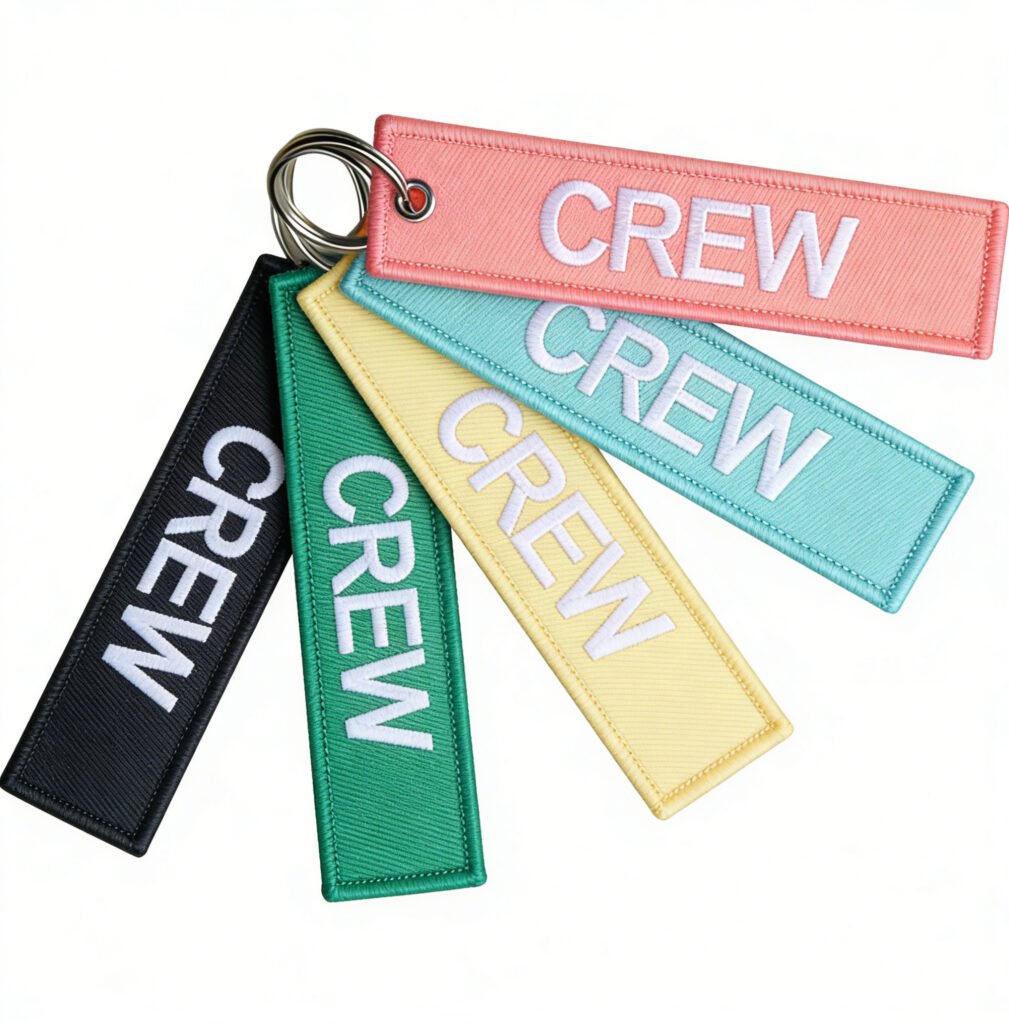
The modern embroidered keychain draws its heritage from the aviation industry’s iconic “Remove Before Flight” safety flags.
These customized embroidered keychains have transcended their utilitarian origins to become a staple in tactical, motorsport, and streetwear circles—a universal symbol of readiness and specialized knowledge.
A standard high-quality tag consists of a high-density twill base, eco-friendly embroidery threads, a reinforced metal grommet, and a heavy-duty split ring.
The core advantages of customized embroidered keychains over rigid keychains are twofold: Safety and Durability.
The soft, fabric-based construction ensures that when attached to car keys, fuel tanks, or premium electronic devices, there is zero risk of scratching paintwork or sensitive surfaces—a critical selling point for automotive enthusiasts and high-end gear owners.
Furthermore, high-density embroidery offers superior colorfastness.
It withstands prolonged UV exposure, abrasive friction, and rain without fading or fraying.
The large, double-sided printable area ensures maximum visibility for branding, making these customized embroidered keychains a cost-effective, long-term advertising medium.
II. Core Process Analysis: The Three Pillars of Quality
Distinguishing between premium and subpar customized embroidered keychains requires a close examination of three technical elements: border finishing, embroidery coverage, and thread selection.
1. Border Finishing: Defining Structure and Longevity
- Merrowed Border (Overlocked Edge): The industry standard for tactical, automotive, and workwear applications. This process uses dense overlock stitching to completely encase the raw edge of the tag, creating a thick, rounded, and highly durable border. It effectively “locks” the fabric, preventing unraveling and ensuring the tag can withstand heavy use. It is the preferred choice for rectangular or square shapes.
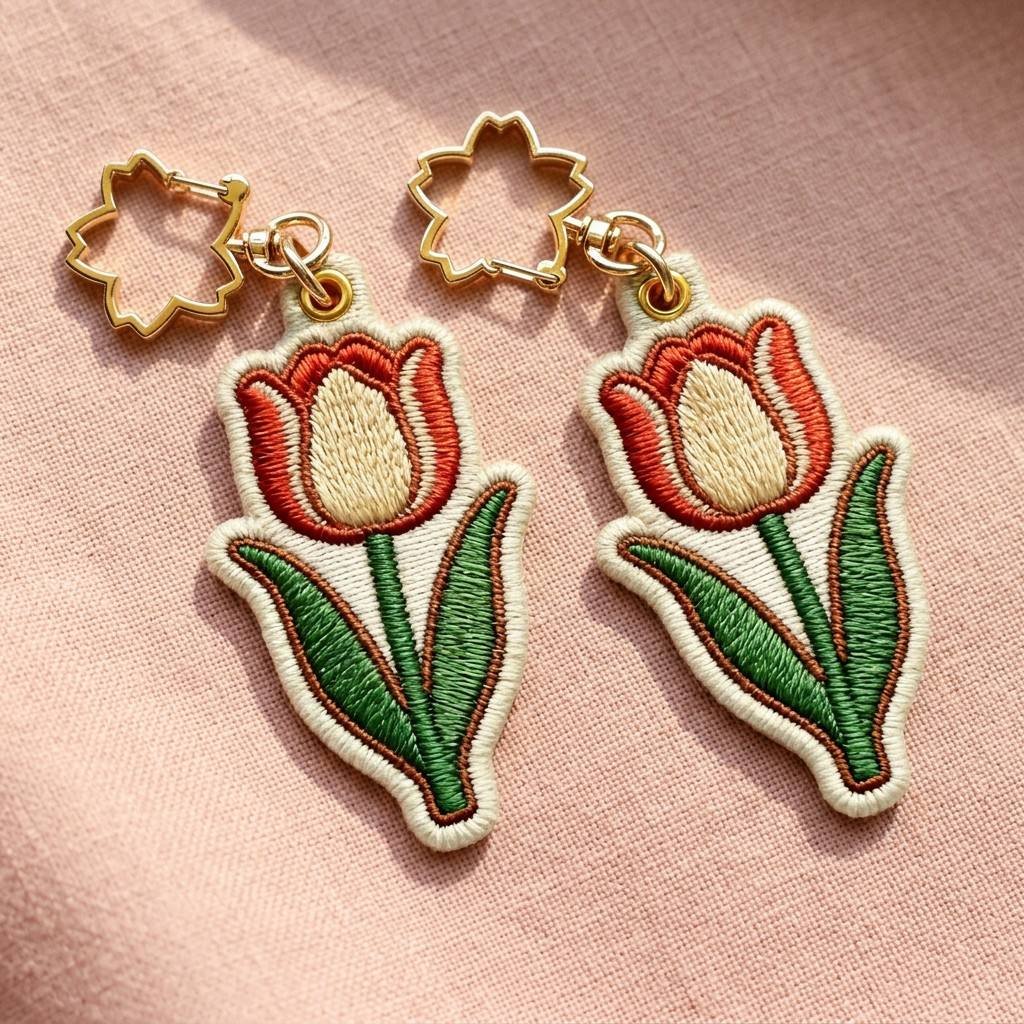
- Hot-Cut / Laser-Cut Edge: Utilizing precision heat or laser technology to cut intricate shapes, this method creates a clean, sealed edge without the raised border. It offers maximum design freedom for irregular logos, artistic silhouettes, and streetwear brands. The result is a sleeker, lighter profile, though slightly less rugged than a merrowed edge.
2. Embroidery Coverage: Balancing Aesthetics and Cost
- 50% Light Coverage: Features a sparse stitch density that allows the fabric texture to show through. This creates a vintage, “distressed” aesthetic popular in Japanese and Americana-inspired streetwear. It is cost-effective and ideal for large text or minimalist designs.
- 75% Standard Coverage: The commercial “sweet spot.” It offers a balanced density that ensures logo clarity and color vibrancy while remaining economically viable for bulk orders. This is the recommended specification for most corporate logos and team identifiers.
- 100% Full Coverage: Every visible area is filled with thread, resulting in a thick, luxurious, and highly dimensional texture. There is zero fabric visibility, making colors appear deeper and more saturated. This premium option is reserved for high-end executive gifts, collector’s items, and applications where perceived value is paramount.
3. Specialty Threads: Functional and Visual Enhancement
- Glow-in-the-Dark Thread: Absorbs ambient light and emits a sustained glow in darkness, offering high visibility and novelty appeal, particularly for tactical or safety-oriented applications.
- Metallic Gold/Silver Thread: Incorporates actual metalized fibers to create a genuine metallic sheen, instantly elevating the product’s perceived luxury and sophistication.
- High-Reflective Thread: Engineered to reflect light intensely when illuminated, serving both an aesthetic purpose and a critical safety function for motorcyclists riding at night.
III. Design Protocols and Technical Constraints
To ensure the final product meets professional standards, designers and buyers of customized embroidered keychains must adhere to the physical limitations of embroidery:
- Avoid Ultra-Fine Details: Embroidery machines cannot accurately render extremely thin lines or micro-text. Fine details will “fill in” or blur together. A minimum stroke width of 2mm and a text height of 4mm are strongly recommended. Sans-serif, bold typefaces yield the sharpest results.
- Manage Color Complexity: Limit the primary color palette to 3–5 colors to maintain high contrast and visual impact. Avoid placing very light colors on very dark backgrounds if the text is small, as the texture of the thread can obscure legibility. Always reference standard color matching systems such as Pantone for precise color accuracy.
- Standardize Artwork Files: Submit vector files (AI, EPS, PDF) whenever possible. High-resolution PNGs (300 DPI) with transparent backgrounds are acceptable alternatives. Always include a 1/8-inch (3mm) “bleed” margin around the design to prevent critical elements from being cut off during the border-finishing process.
IV. Scenario-Based Selection Strategy for Bulk Orders
Aligning the product specification with the end-use case is critical for market success when ordering customized embroidered keychains:
- Automotive Clubs & Motorsports: Specify Merrowed Borders + 100% Full Coverage. Emphasize the “no-scratch” fabric construction as a key selling point. These are ideal for fleet identification and commemorative gifts.
- Tactical & Military-Inspired Gear: Adhere to the classic “Remove Before Flight” aesthetic. Utilize high-contrast, two-tone color blocking (e.g., Red/Black, Orange/Black) combined with metallic grommets to reinforce a rugged, hardcore identity.
- Streetwear & Fashion Brands: Leverage Hot-Cut edges for unique silhouettes. Incorporate Glow-in-the-Dark or Metallic threads to align with trend-driven aesthetics. These tags function effectively as apparel hangtags or premium packaging inserts.
- Corporate Events & Promotional Giveaways: 75% Standard Coverage offers the best ROI. Utilize the double-sided print area strategically: place the corporate logo on one side and a slogan, website URL, or contact information on the reverse to maximize brand recall.
V. Standardized B2B Procurement Workflow
To mitigate risk and ensure quality consistency when sourcing customized embroidered keychains, follow this structured process:
- Requirement Finalization: Provide vector artwork and specify all parameters: dimensions, quantity, border type, embroidery coverage, and thread types.
- Digital Proofing: The factory will generate a digital mockup for your approval, allowing you to verify layout, scale, and color placement before production begins.
- Physical Sampling (Recommended for Bulk Orders): For orders exceeding 1,000 units, investing in a pre-production physical sample is highly recommended. This allows for a tactile evaluation of stitch density, material hand-feel, and overall construction quality.
- Mass Production & QC: Upon sample approval, bulk production commences. Reputable manufacturers implement in-line quality control to inspect for loose threads, color consistency, staining, and the secure attachment of grommets and rings.
- Final Inspection & Packaging: A final 100% visual inspection should be conducted before the products are individually poly-bagged or bulk-packed in crush-resistant cartons to ensure they arrive in perfect condition.
Conclusion: Engineering a High-Impact Brand Asset
These customized embroidered keychains are far more than mere promotional trinkets; they are tangible touchpoints that connect a brand with the identity and values of its target audience.
Their unique blend of vintage workwear appeal, operational safety, exceptional durability, and high-visibility branding makes customized embroidered keychains indispensable in tactical, automotive, and fashion-forward markets.
For the B2B procurement professional, mastering the production of customized embroidered keychains lies in moving beyond price comparison to a deeper understanding of border mechanics, stitch density optimization, and material science.
By applying the principles outlined in this guide, you can transform a simple key tag into a durable, high-frequency brand ambassador that delivers lasting value across diverse global markets.
- Explore Our Full Custom Embroidered Keychain Collection
- Contact Our Engineering Team for a Free Quote & Digital Proof
Need a recommendation for your custom project?
Send your artwork, quantity, delivery country and target date. Our team will help you compare practical materials, production options and packaging.
Send Your Requirements →Ready to discuss your requirements?
Use our standard inquiry form to request a quote, product catalog or production recommendation.
Get a Quote →Frequently Asked Questions
What should I include when requesting a quote?
Share your artwork or reference image, required quantity, preferred material or finish, packaging needs, delivery country and target date. These details help the production team recommend a practical specification and quote accurately.
Can I confirm a sample before full production?
For custom projects, sample and artwork approval should be agreed before bulk production whenever the design, color matching, construction or packaging requires confirmation. The appropriate sample route depends on the product and order requirements.
How can I check that the finished order matches my requirements?
Keep the approved artwork, material specification, quantity and packaging instructions together in the purchase confirmation. A shipment inspection against those agreed requirements helps identify issues before dispatch.