Welcome to hykeychain.com

Custom Silicone Wristband Keychains: The B2B Sourcing Guide to High-ROI Brand Marketing

In the competitive landscape of corporate promotions, trade show giveaways, campus engagement, and event merchandising, procurement managers face a constant challenge: selecting swag that is lightweight, highly functional, and guarantees maximum brand visibility. The custom silicone wristband keychain has emerged as a dominant solution, ingeniously merging the passive visibility of a wristband with the utility of a keychain. This hybrid product addresses the universal pain points of lost keys and cumbersome carry-alls. It can be worn on the wrist during commutes, slipped onto a backpack strap, or secured to a set of car keys—ensuring your brand remains in the user’s peripheral vision throughout their day. For B2B buyers across North America, Europe, Southeast Asia, and the MENA region, this guide provides a strategic framework for sourcing silicone wristband keychains that balance safety, durability, and marketing efficacy.
I. Core Value Proposition: Why It’s a Marketing Imperative
1. Safety, Durability, and All-Condition Reliability
Premium silicone wristband keychains are manufactured from food-grade, eco-friendly silicone. This material is non-toxic, odorless, and hypoallergenic, making it safe for adults, teens, and children alike. Its physical properties are exceptional: it is inherently waterproof, sweat-resistant, and anti-aging. Unlike metal or acrylic accessories, silicone is soft and flexible, eliminating the risk of scratching smartphone screens, automotive paint, or other valuables. It withstands extreme temperatures and repeated flexing without cracking or deforming, ensuring a long service life even in harsh outdoor or industrial environments.
2. Mobile Advertising and Sustained Brand Exposure
Unlike static desk accessories, a wristband keychain functions as a “moving billboard.” Every time the user checks their watch, opens a door, or drives their car, your logo is on display. This “ambient exposure” generates hundreds of passive impressions over the product’s lifespan. For the cost of a paper flyer that is discarded in seconds, a silicone wristband keychain delivers a marketing impression every single day for years. This high-frequency, low-cost visibility offers an unmatched ROI compared to traditional print media.
3. Extreme Cost-Efficiency and Scalability
From a supply chain perspective, silicone injection molding is a mature, high-speed process requiring relatively low tooling investment. Suppliers typically offer aggressive tiered pricing, making it economically viable to order tens of thousands of units for large-scale trade show distributions or to fulfill smaller, niche batch orders for local community events. For budget-conscious marketing directors, it represents one of the most cost-effective physical media available for achieving mass brand penetration.
II. Process Selection: Logo Techniques and Hardware Configuration
1. Logo Customization Techniques: Defining Perceived Quality
The method used to apply your logo dictates the final product’s aesthetic and durability. Four primary techniques dominate the B2B market:
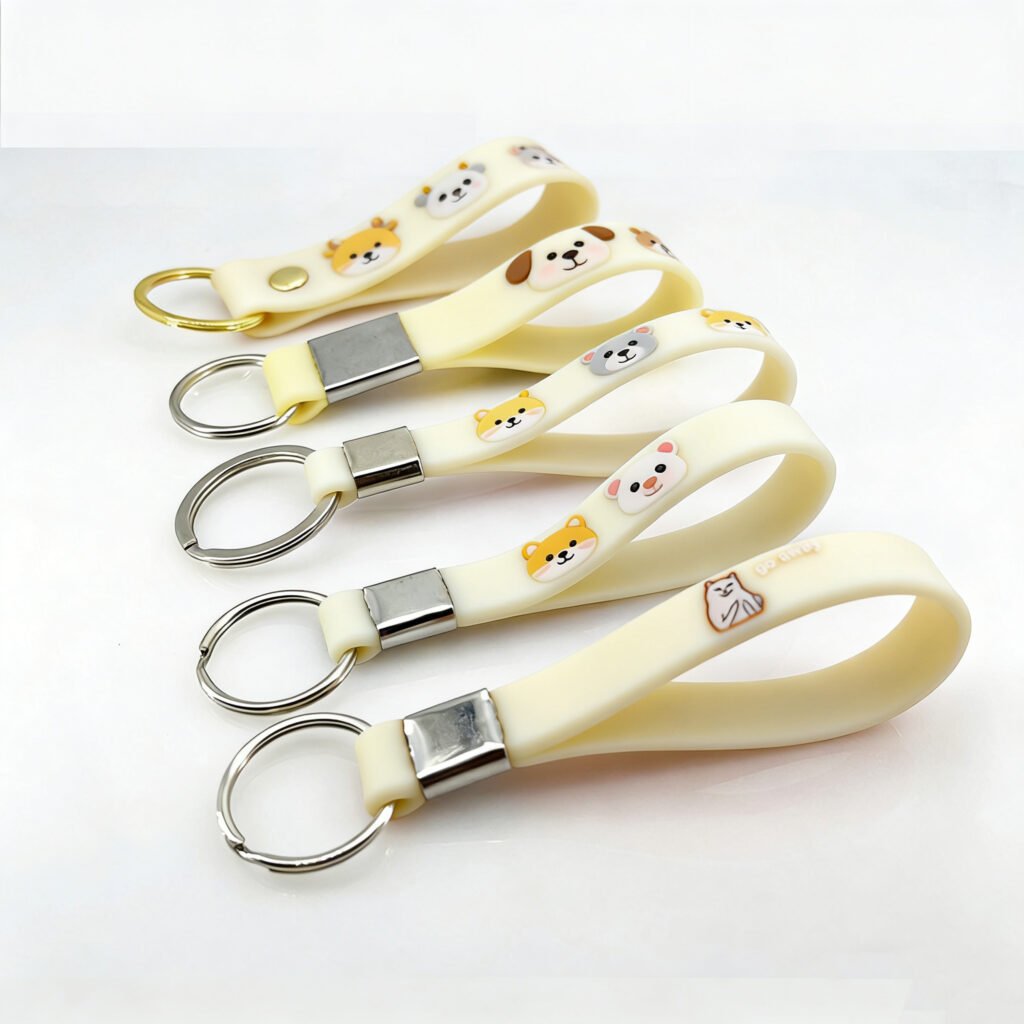
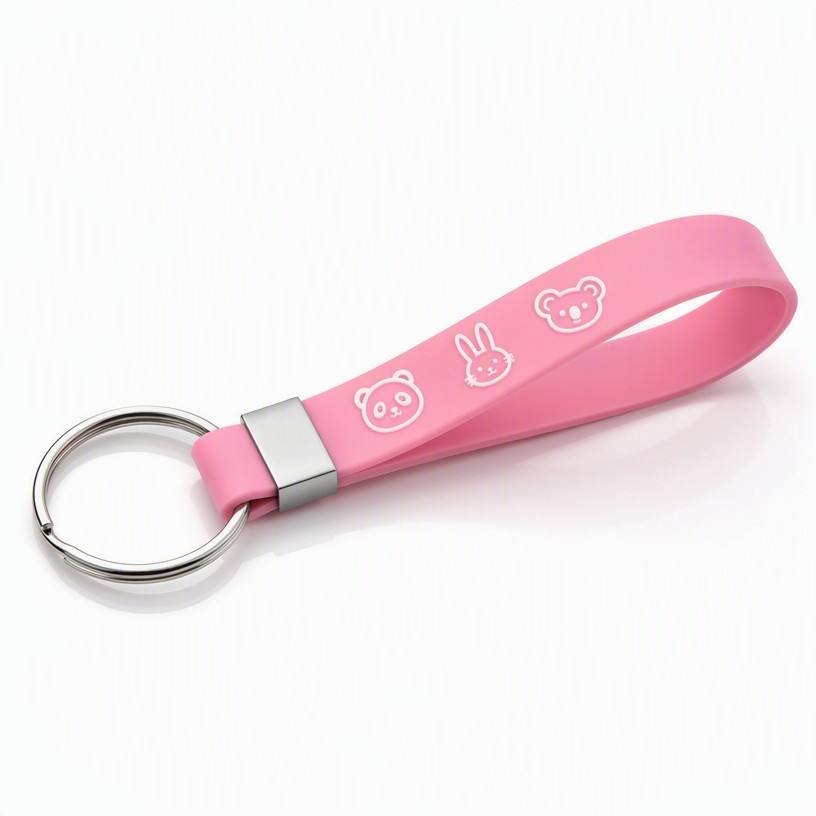
• Screen Printing: The industry standard for high-volume orders. It applies ink directly onto the silicone surface, allowing for vibrant, multi-color designs and crisp text. It is the most cost-effective option for simple logos, slogans, and event identifiers.
• Debossing (Recessed Molding): The logo is molded into the surface of the silicone, creating a subtle, indented impression. This technique is incredibly durable—the logo will never fade or rub off. It conveys a minimalist, professional, and understated aesthetic, ideal for corporate gifting and executive merchandise.
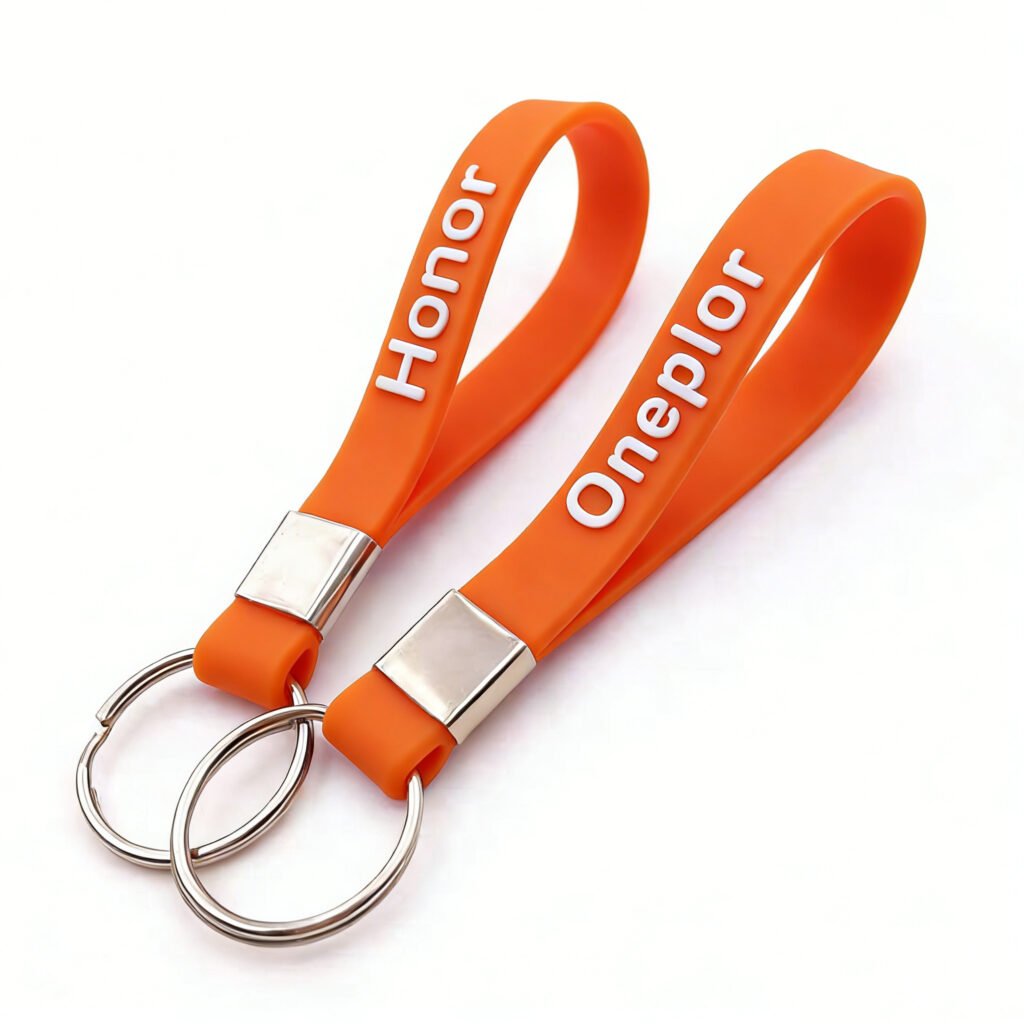
• Embossing (Raised Molding): The logo is molded to protrude from the surface, creating a tactile, three-dimensional effect. This adds a premium, “chunky” feel to the product and significantly increases visual recognition from a distance, making it popular for sports teams, fitness brands, and streetwear labels.
• Debossing with Color Fill (Inked): This combines the durability of debossing with the visual pop of color. Ink is precisely applied into the recessed areas of the logo. The result is a high-contrast, sophisticated finish that resists abrasion while maintaining a premium look. It is the preferred choice for mid-to-high-end brands seeking a balance between subtlety and brand clarity.
2. Hardware and Color Management: Aligning with Brand Identity
• Metal Hardware: Options range from standard flat split rings (durable and cost-effective) to D-rings, quick-release buckles (for easy attachment/detachment), and premium leather-trimmed clasps (for luxury positioning). The choice of hardware should reflect the overall brand tier.
• Color Systems: Reputable manufacturers utilize the Pantone Matching System (PMS) to ensure color accuracy. Beyond solid colors, sourcing allows for segmented color blocking, marbled effects, and specialty finishes like neon/fluorescent (for high visibility) and glow-in-the-dark (for novelty and safety applications). Strict color management ensures your corporate VI remains consistent across all batches.
III. Scenario-Based Sourcing: Matching Product to Purpose
• Trade Shows, Conferences, and Large-Scale Events: As an entry credential or attendee gift, these wristbands are lightweight and easy to distribute en masse. Their high utility ensures they won’t be discarded immediately, making them a superior tool for lead generation and brand recall compared to paper brochures.
• Sports, Fitness, and Athletic Events: Their waterproof and sweatproof nature makes them ideal for marathons, cycling events, and gym memberships. They function perfectly as race bibs, participant IDs, or loyalty tokens, fostering a sense of community and belonging among attendees.
• Retail Merchandise and IP Licensing: For fashion brands, anime studios, and entertainment franchises, silicone wristband keychains are a low-cost, high-margin peripheral product. They broaden the product catalog and serve as an accessible entry point for younger fans, driving both engagement and revenue.
• Campus and Community Engagement: Their safety and durability make them perfect for university orientations, club activities, and field trips. The casual, wearable format resonates strongly with student demographics, serving as a popular and practical souvenir.
IV. B2B Procurement Risk Management and Execution
1. Key Procurement Metrics
• Minimum Order Quantity (MOQ): Verify if the supplier supports a flexible model that allows for small-batch test runs (e.g., 100-500 units) before committing to a 10,000-unit production run. This mitigates financial risk and allows for market testing.
• Lead Times: A standard production cycle includes 24-48 hours for digital proofing and 7-15 days for bulk manufacturing post-approval. Always plan backward from your event date, factoring in international shipping and customs clearance.
• Compliance and Safety Certifications: This is non-negotiable for global distribution. Insist on documentation proving compliance with RoHS and REACH (EU), FDA standards for food-grade materials (USA), and CPSC regulations. This ensures the product is free from heavy metals, phthalates, and BPA, protecting your brand from liability and ensuring smooth customs clearance.
2. Standardized Procurement Workflow
1. Specification Submission: Provide vector artwork (AI, PDF, EPS) and specify dimensions, quantity, Pantone colors, and desired logo technique.
2. Digital Proofing: The supplier should provide a high-resolution digital mockup for your approval, verifying layout, scale, and color placement.
3. Physical Sampling (Recommended for Bulk Orders): For orders exceeding 1,000 units, request a Golden Sample. This allows you to physically inspect the silicone’s softness, the logo’s clarity, and the hardware’s durability before mass production begins.
4. Mass Production & Quality Control: Upon sample approval, production commences. Implement an AQL (Acceptable Quality Limit) inspection standard to monitor for inconsistencies in color, molding defects, or hardware attachment failures.
5. Final Inspection and Logistics: A final 100% visual inspection should be conducted to remove defective units. Products should be individually poly-bagged to prevent dust accumulation and packed in crush-resistant cartons for international transit.
Conclusion: Engineering a High-Frequency Brand Touchpoint
The strategic value of the custom silicone wristband keychain lies in its unique convergence of utility, safety, and persistent visibility. It transcends the category of disposable promotional trinkets to become a durable asset in your brand’s marketing infrastructure. For the B2B procurement professional, success depends on looking beyond the unit price to evaluate the nuances of logo application, the integrity of the silicone compound, and the supplier’s adherence to international safety standards.
In a global marketplace where consumers are increasingly selective about the promotional products they choose to keep, the silicone wristband keychain offers a rare combination of low cost and high retention. Whether distributed at a tech conference in Berlin, a music festival in Jakarta, a marathon in Tokyo, or a trade show in Dubai, it serves as a constant, tactile reminder of your brand’s presence. It is more than just a keychain—it is a wearable investment in long-term brand equity.
Ready to custom your own branded silicone wristlet keychains? Contact us today for a free quote and digital mockup!