Welcome to hykeychain.com
How to Prepare Artwork for Custom PVC Keychains: A B2B File and Sample Approval Guide
Prepare custom PVC keychain artwork with a practical B2B guide to file formats, finished size, color zones, relief, hardware and sample approval.

How to Prepare Artwork for Custom PVC Keychains: A B2B File, Color and Sample Approval Guide
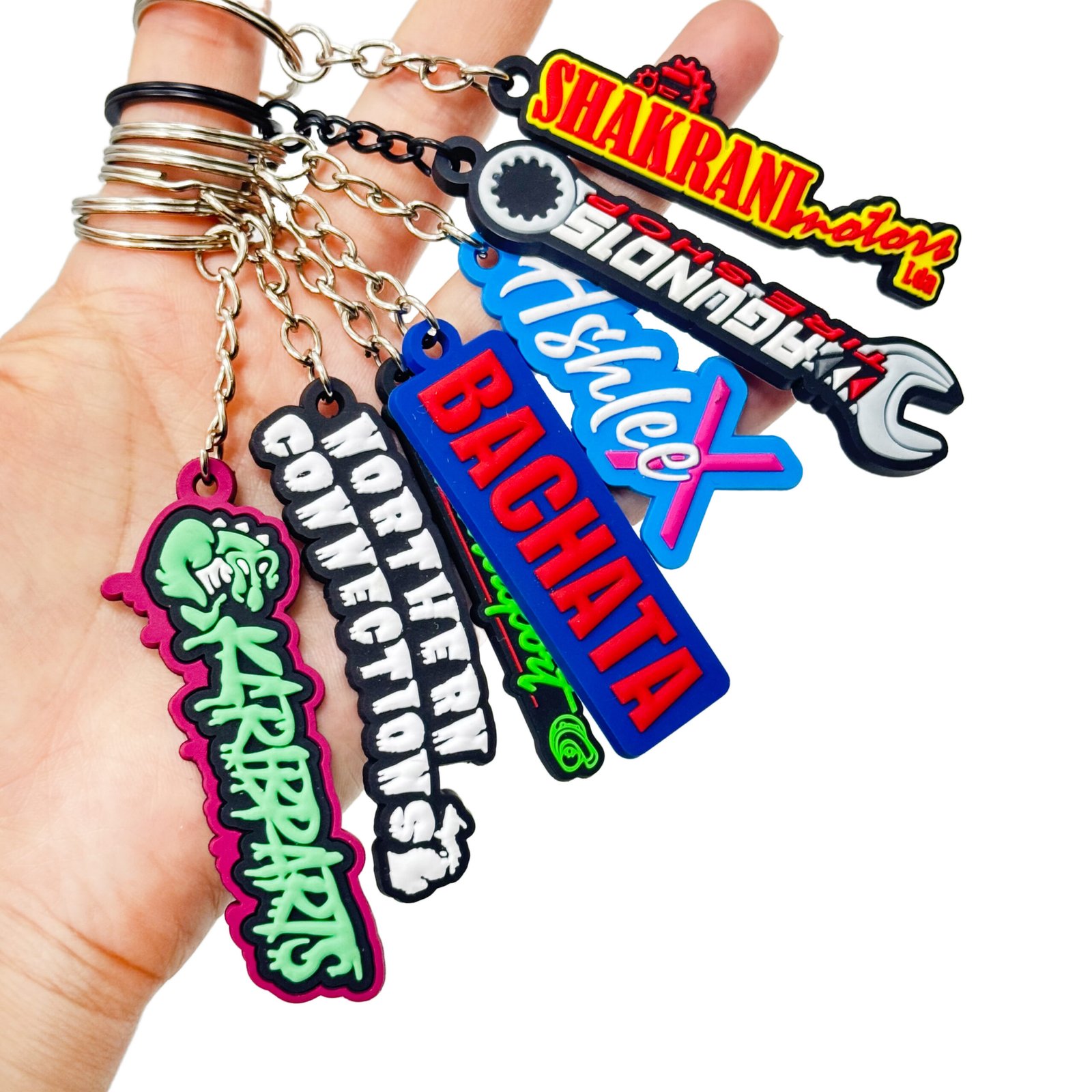
Custom PVC keychains can reproduce bold outlines, layered colors and distinctive shapes, but the result depends on more than a logo file. Before a mold is made, the artwork must communicate the finished size, color areas, relief, attachment, back treatment and any details that matter to the buyer. A clear production brief reduces unnecessary revision rounds and makes sample approval more meaningful.
Quick answer: send the clearest editable artwork you have, specify the finished size and intended use, mark each color area and attachment position, and ask the factory to return a production drawing before tooling. Do not approve a digital image alone when small text, fine lines, layered relief or color matching are important. Review the drawing and sample against the same written brief.
Why artwork preparation matters for a PVC keychain order
Soft PVC keychains are molded products. Their outline, raised areas and recessed areas are defined before production, so an artwork review is also a practical manufacturing review. A file may look clear on a large monitor yet lose legibility when it becomes a small physical keychain. Thin strokes can merge, small lettering may become difficult to read, and crowded color zones can make a design harder to fill cleanly.
For a B2B buyer, this stage protects several decisions at once: brand presentation, usability, cost control and delivery planning. It gives a sales team, event organizer or retail buyer a record of what was approved before a sample and bulk order. It also helps a factory identify questions early, when a change is still inexpensive to make.
1. Start with the job the keychain needs to do
Before discussing file formats, state the product purpose. A compact trade-show giveaway, a retail character charm, a membership item and a bag accessory can all call for different sizes, attachments, packaging and levels of detail. The factory can give more useful artwork feedback when it knows how and where the item will be used.
- Target user and use: Is it for keys, a backpack, a zipper pull, an event handout or resale?
- Target quantity: A planned quantity helps the supplier discuss the appropriate tooling and packing route.
- Target size: Give a width or height in millimetres and say which dimension is critical.
- Deadline and delivery country: These allow time for drawing review, sampling, production and shipment preparation.
- Brand requirements: Identify non-negotiable logo elements, approved colors and any licensing or artwork ownership requirements.
If you are still deciding whether PVC is the right material, compare the intended feel, artwork style and durability needs with PVC, metal and acrylic keychain options before finalizing the design.
2. Send the best available source artwork
Vector artwork is usually the clearest starting point because shapes and outlines can be reviewed without relying on a low-resolution preview. Common editable formats include AI, EPS, SVG and PDF with vector paths. A high-resolution PNG, PSD, JPG, hand sketch or reference photo can still start a conversation; the supplier may need to redraw or simplify it before a production drawing is approved.
A useful artwork package separates what is known from what needs factory advice. Include the original logo or illustration, any existing brand guideline, a sketch showing the desired outline, and notes for the front and back. If the artwork contains fonts, supply outlined text or name the typeface. If several versions of a logo exist, clearly mark the version approved for this project.
Do not enlarge a small web image and assume it is production-ready. Enlargement does not create missing detail. A factory can review what is practical, but it cannot reliably infer a brand color, letter shape or hidden line from a blurred file.
3. Review the design at the finished physical size
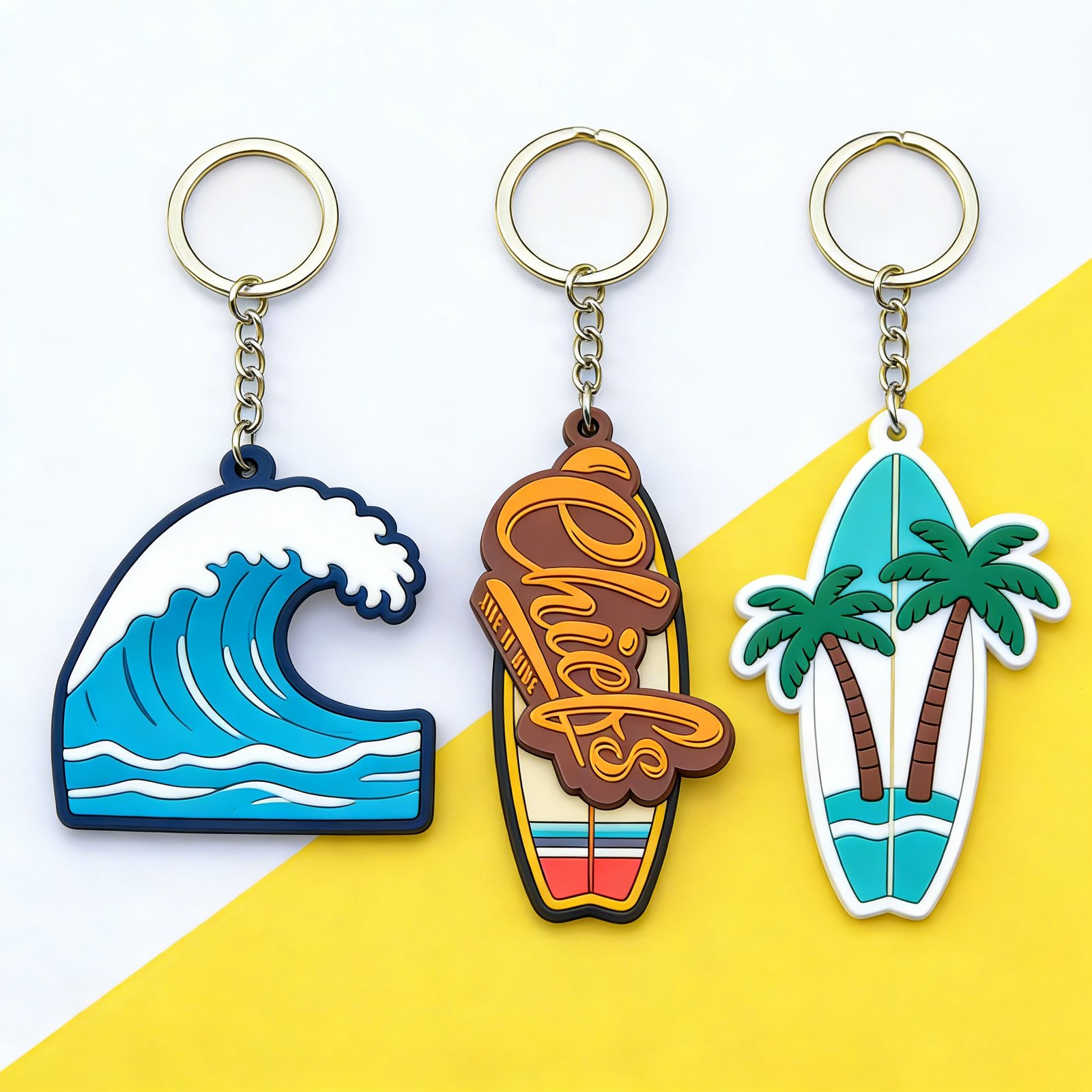
Place the proposed design at its intended final dimensions before you judge its small details. This is one of the simplest ways to see whether lettering, gaps and internal lines are still readable. Print a paper version at 100% scale or view it at the actual dimensions beside a ruler. For a small keychain, a clean silhouette and fewer stronger elements often communicate better than a complex illustration.
There is no universal minimum line width that applies to every PVC design. The workable size depends on the finished dimensions, mold construction, color separation, relief plan and the visual tolerance of the artwork. Instead of relying on a generic number, ask the factory to flag any areas where a line, gap, letter or color boundary may be too small for consistent molding.
Also review the hanger hole and outer edge. The attachment point needs enough surrounding material for the selected hardware and should not cut through an important character feature or narrow section. Keep critical graphics away from the edge where the outline and finishing must remain clear.
4. Turn artwork into clear color zones and relief levels
Soft PVC is well suited to designs with distinct colored areas. In the production drawing, each visible color zone should be easy to identify. Where needed, label the color reference, color name or brand code. A supplier can advise on matching options, but a photo on one screen should not be treated as a final color standard because displays, lighting and image compression vary.
Describe which parts should be raised, recessed or left flat. A typical 2D PVC keychain uses raised outlines and colored fills to separate features. Layered relief can make a logo, mascot or lettering more tactile, but it can also make very dense artwork harder to read. Prioritize the elements that must be recognized first: the brand mark, main character, headline word or icon.
For example, the perimeter, key lettering and major color blocks may deserve raised treatment, while secondary texture can be simplified or recessed. A clear hierarchy helps the factory prepare a drawing that is both visually recognizable and practical to mold.
5. Choose 2D or 3D deliberately
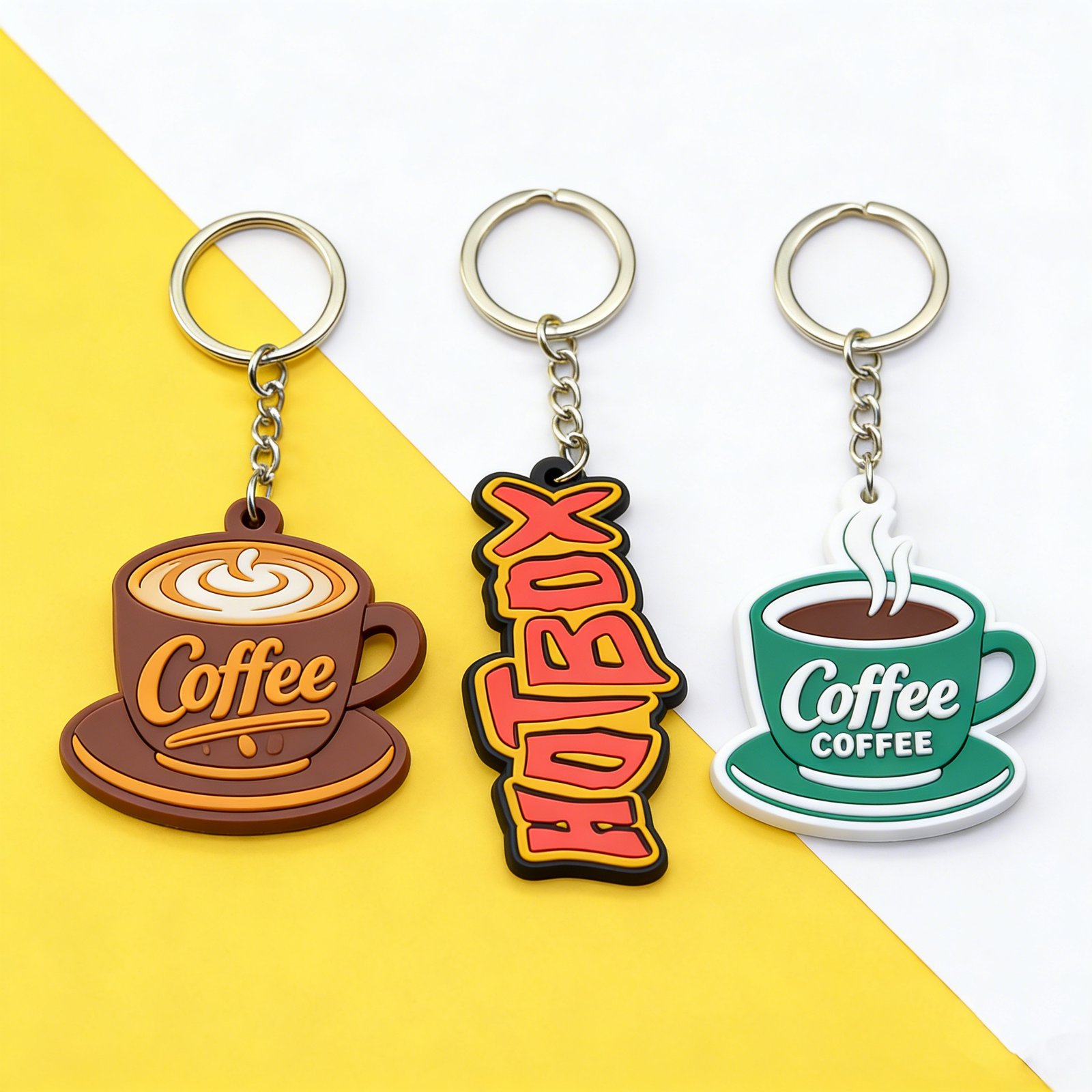
In custom PVC keychain terminology, “2D” commonly describes a mostly flat product with stepped or raised color layers on one or both faces. “3D” usually refers to more sculpted, rounded or dimensional surfaces. These labels are useful starting points, but they are not a substitute for a drawing. Ask the supplier to show the expected front, back and side treatment before tooling.
Choose a 2D layout when the key message depends on a logo, text, graphic outline or several clear color blocks. It is often effective for promotional designs because people can read it quickly. Consider more dimension when the concept relies on a character, object or tactile shape, while allowing enough area for features to remain recognizable.
Do not describe a product only as “3D” if some areas must remain flat for text or printing. Mark the intended relief in the artwork, or ask for a factory recommendation with a revised drawing.
6. Specify the attachment, back and packaging before sampling
The artwork is not complete until it shows how the product will be used. Confirm the ring, chain, clasp, cord or other attachment; the placement of the hole or eyelet; the back-side treatment; and whether a card, polybag or retail pack is required. These choices affect the outline, balance and inspection points.
For a front-and-back design, provide separate artwork for each face. State whether the two sides must align in a particular orientation. For a single-sided design, clarify what should appear on the reverse: plain PVC, a debossed mark, a simple color, or another approved treatment. If packaging has a barcode, warning, country mark or retail label, provide that information as part of the same project brief.
Artwork handoff checklist for B2B buyers
Before requesting a quotation or sample, send one consolidated brief. The checklist below gives the project team and factory a shared starting point.
| Item | What to provide | Why it matters |
|---|---|---|
| Artwork source | Editable vector file where available, plus a PDF or image reference. | Reduces ambiguity during drawing preparation. |
| Finished size | Overall width or height in mm; state the critical dimension. | Allows a practical review of text, lines and holes. |
| Front and back | Separate views and any orientation notes. | Prevents assumptions about reverse-side treatment. |
| Color plan | Named colors, brand references or an approved swatch where available. | Creates a review record for color zones. |
| Relief and outline | Mark raised, recessed and must-keep details. | Guides the production drawing and mold discussion. |
| Hardware and pack | Ring, chain, clasp, card, bag or other packaging request. | Confirms use, assembly and shipment requirements. |
For the wider quotation checklist, see what information to send for a custom keychain quotation. It covers the commercial details that should travel with the artwork.
Send Your Artwork for a Practical Review →
7. Approve a production drawing before a physical sample
A production drawing is the bridge between design intent and sample making. Review it against the original brief rather than against memory. Check the outline, size, spelling, color labels, front and back, attachment position, relief levels, quantity notes and packaging requirements. If the factory has simplified a feature, make sure the change is visible and accepted in writing.
For an order where physical appearance matters, a sample is the point to test the design as an object. Compare the sample to the approved drawing under normal viewing conditions. Check whether the key elements are legible at the intended size, whether the attachment is appropriate, and whether the color separation and outer edge are clean. Keep one approved reference or clear approval record for shipment inspection.
A responsible sample review does not promise that every handmade or molded item will be identical at microscopic scale. It establishes agreed tolerances and visible acceptance points before bulk production. That makes the final shipment inspection faster and more objective.
Common artwork issues that delay approval
- Too many tiny elements: combine minor details or enlarge the product if they are essential.
- Unclear color instructions: label the intended zones instead of relying only on a screen preview.
- Missing back-side information: show both faces and their orientation.
- Hardware added late: decide the attachment before the outer outline is finalized.
- Several conflicting files: identify one master version and date it.
- Approval without a written brief: keep the drawing, sample feedback and changes together for the factory and buyer.
During factory review, the most useful question is not simply “Can you make this?” It is “Which details need adjustment to remain clear and durable at this size?” That invites a specific, usable response instead of an assumption.
A practical artwork-review sequence with the factory
For a first order, use a simple sequence that keeps technical decisions visible. First, send the source artwork and project brief. Second, review the factory’s questions about size, lines, color separation, attachment and back-side treatment. Third, approve a revised production drawing. Fourth, review the physical sample where the order needs it. Finally, confirm which approved file, sample photos and packing details will be used as the reference for bulk production and shipment inspection.
Keep feedback consolidated. If several people contribute comments, nominate one person to issue the final approval. Otherwise, a designer may approve the logo treatment while a buyer assumes a different hardware choice, or an event team may change a delivery requirement after the sample has been started. A dated approval note that identifies the drawing version is more useful than scattered messages.
During sample review, check the item in the context in which it will be used. Attach it to keys, a bag or the intended display card. Look at it at normal viewing distance rather than only in a close-up photograph. Confirm that the ring or chain moves correctly, the shape feels balanced, the key artwork reads quickly and the packaging supports the project purpose. These practical checks create experience-based feedback for the next production step.
If a revision is needed, state the requested outcome and where it appears on the drawing or sample: for example, enlarge a letter, separate two colors, shift the hole, simplify a border, adjust a back-side orientation or change the attachment. This gives the factory an actionable instruction and preserves a traceable record for the buyer.
FAQ
What file format is best for custom PVC keychain artwork?
An editable vector file such as AI, EPS, SVG or vector PDF is usually preferred. A high-resolution image, sketch or reference can be used to begin a review when vector artwork is not available.
Can a factory make a PVC keychain from a JPG or screenshot?
Often it can prepare a revised drawing from a clear image, but the buyer should confirm spelling, contours and color areas before tooling. A low-resolution screenshot should be treated as a reference, not as final production art.
How many colors can a custom PVC keychain have?
The practical answer depends on the finished size, separation of color zones and design complexity. Send the artwork and target size so the supplier can assess the layout rather than relying on a generic color limit.
Should I choose a 2D or 3D PVC keychain?
Choose a 2D layout for clear logos, text and graphic color blocks. Consider a more sculpted design when the product is led by a character or object. Ask to see the proposed relief in a production drawing.
Do I need to approve a sample?
For custom work, sample approval is a useful control point when design accuracy, color, hardware or packaging are important. Agree the approval route and timing before production begins.
What should I check before bulk production?
Check the approved drawing and, where used, the sample against the written brief: size, outline, text, colors, front and back, attachment, packaging and any shipment requirements.
Conclusion: make the artwork brief a production tool
The best PVC keychain artwork package is not necessarily the most elaborate file. It is the file and brief that make the intended product easy to understand at actual size. Give the factory a clear source file, a finished-size reference, color and relief notes, hardware instructions and a sample approval route. That approach supports cleaner communication from quotation through shipment inspection.
Heyang Craft can review your PVC keychain artwork with the product purpose, size, attachment and delivery requirements in view. Send the files you have, even if they are not final, and we can identify the practical questions to resolve before sampling.