Welcome to hykeychain.com
Clothing Labels (Woven Labels / Printed Labels) B2B Custom Sourcing Guide: The Detail Game of Brand Premium and Compliance

Introduction
In the chain of apparel brand creation and product development, there exists a detail that is easily underestimated yet capable of influencing the overall outcome—the label. Many brand owners have had a similar experience: the silhouette is repeatedly refined, the fabric is carefully selected, and the workmanship is strictly controlled. Yet, when the finished product is turned to the collar, a dull, generic label is sewn on, instantly dragging down the entire garment’s appeal. For original brands, although the label is small, when utilizing customized clothing labels, it acts as a switch for consumers to judge “how much this piece of clothing is really worth.” It is the final line of defense for brand vision and professionalism.
When international apparel developers look to upgrade their collections, choosing professional customized clothing labels becomes a top strategic priority. This comprehensive guide details everything from manufacturing techniques to procurement specifications.
I. Process Analysis: The Core Differences Between Woven Labels and Printed Labels
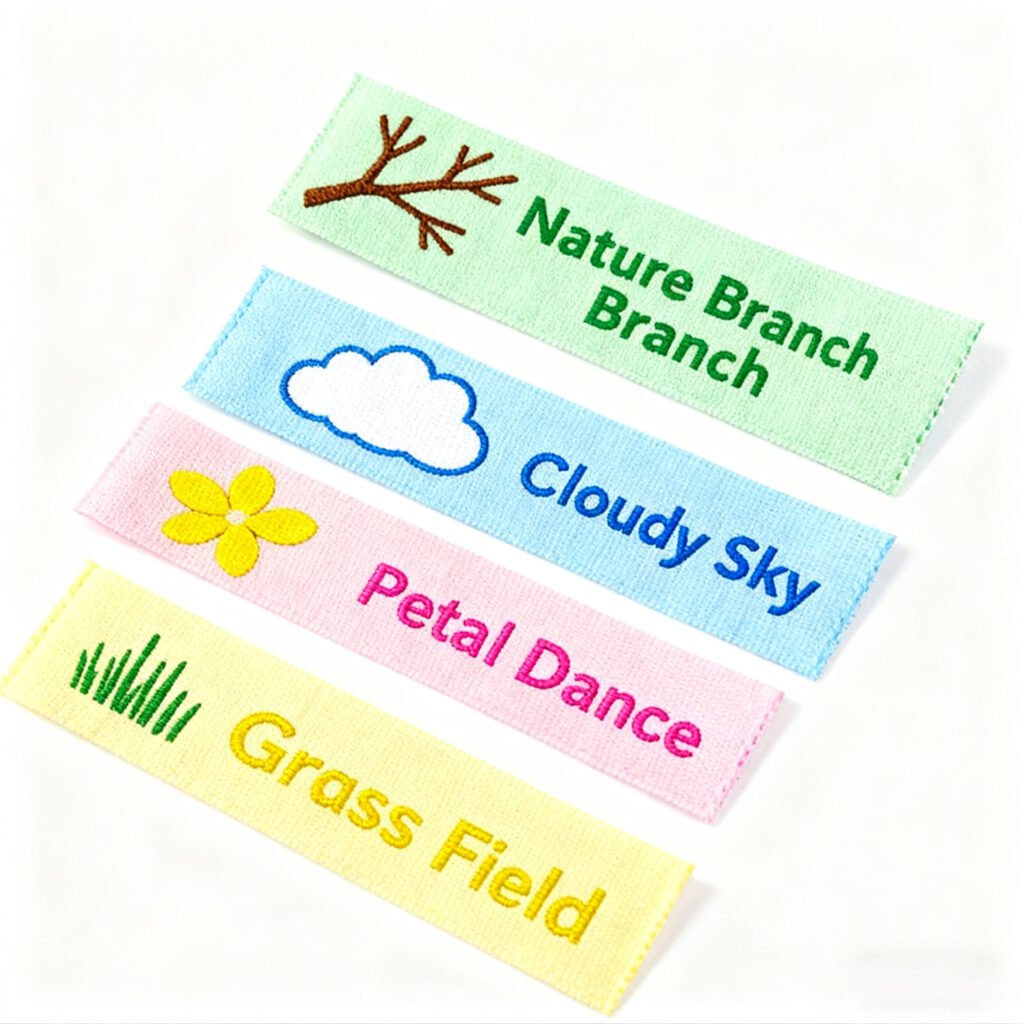
Clothing labels are mainly divided into two categories—woven labels and printed labels—based on their manufacturing processes. The two have essential differences in texture, durability, and cost structure.
Woven labels are identifiers directly woven on a loom using yarns. The pattern and text are part of the fabric itself, not relying on ink adhesion. The biggest advantage of this process is extreme washability—no matter how the washing machine tumbles, the font remains clear, the edges stay sharp, and there is no fading or fraying. High-end customized clothing labels created with this method have a delicate and soft touch, with no prickly feeling when worn close to the skin. They are the standard choice for streetwear brands and independent designer labels to enhance product grade.
Printed labels, on the other hand, use eco-friendly ink to print patterns onto satin or washed fabric. Their unit cost is lower, making them suitable for mass production, but the pattern may fade after multiple washes. The irreplaceability of printed labels lies in their information-carrying capacity: care labels and composition labels need to display a large amount of fine text such as fabric percentages, washing symbols, and multilingual information. These are difficult to achieve with woven labels, making printed labels a compliance necessity for garments to be sold on the market.
II. Core Value: The “Premium Leverage” Effect of Customized Clothing Labels
There is a simple psychological rule in clothing consumption: when judging the value of a garment, consumers often do not rely on analyzing fabric yarn counts. Instead, they judge by touching and checking the label. A custom neck label featuring customized clothing labels with clear printing, exquisite color matching, and neat stitching serves as the “quality endorsement” for the entire garment.
When a consumer picks up two white T-shirts with similar silhouettes—one sewn with a blurry, faded generic label, and the other with a clean, sharp, and delicately textured set of customized clothing labels—almost everyone will intuitively think the latter is more expensive, better, and more trustworthy, even if the fabric cost of the two is nearly identical. This is the premium leverage effect of labels: with a very small cost investment, it leverages the consumer’s perception of the brand as “legitimate, dedicated, and high-quality”. This investment can almost immediately be reflected in pricing and brand reputation.
III. Selection Logic: The Combination Strategy of Neck Labels, Care Labels, and Size Labels
A professional brand identification system requires a layered design strategy:
- Neck Labels / Main Labels (The Visible Face): As the core touchpoint of brand vision, the first glance a consumer takes when opening the collar determines the first impression. It is recommended to use customized clothing labels, paired with brand-exclusive colors and fonts, to ensure consistency with the overall design language.
- Care Labels / Composition Labels (The Invisible Bottom Card): These carry fabric composition, care instructions, country of origin information, and safety standards. They are a compliance necessity for garments to be sold. Typically, the printed label process is used to ensure small text is clear and readable.
- Side Labels / Size Labels: Can flexibly use either woven or printed customized clothing labels to supplement brand stories, size information, or decorative elements, enhancing the richness of details.
IV. Customization Details and Pitfall Avoidance Guide
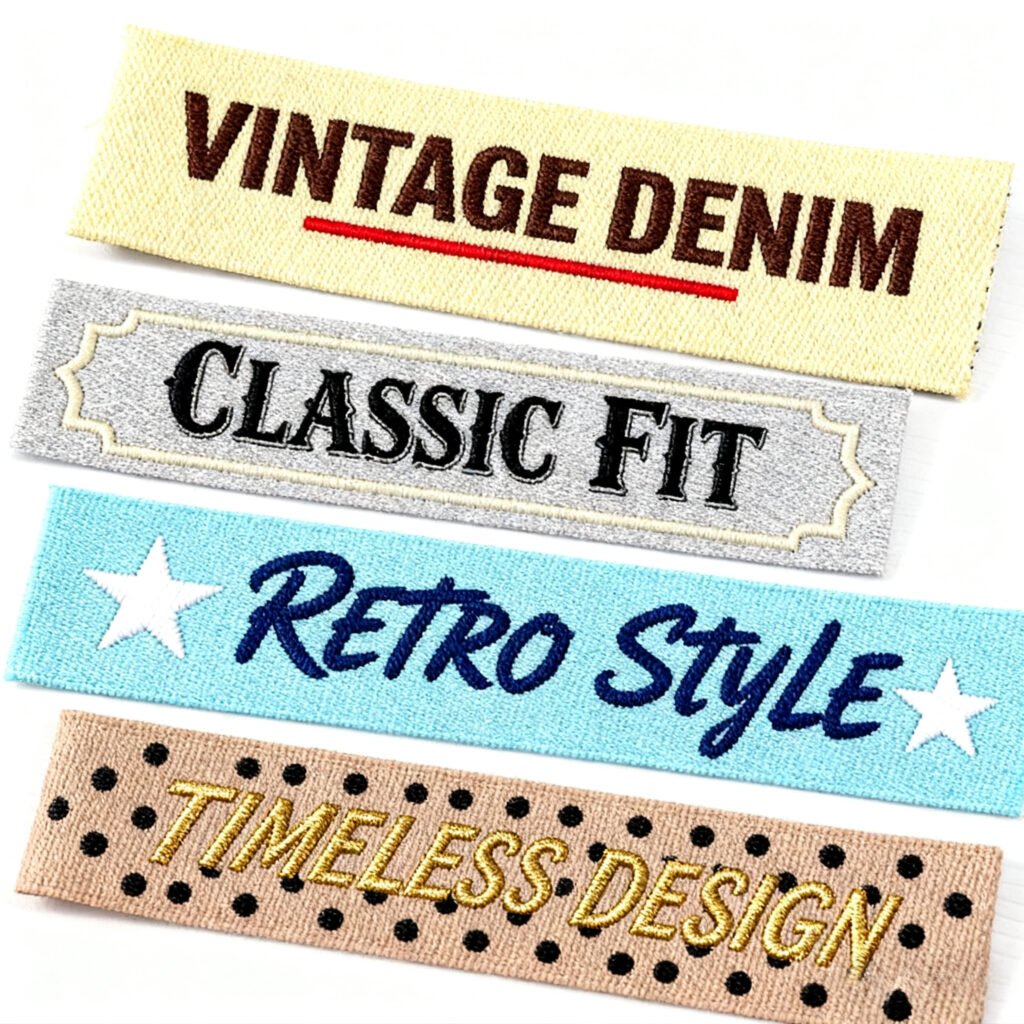
The process of ordering customized clothing labels is not complicated: determine label type → provide vector files and copy → factory layout confirmation → sampling → bulk production. The cycle usually takes 7–12 days. However, the following details are prone to pitfalls and require key control:
- File Format: Be sure to provide AI or PDF vector files. If pixel images are used, small fonts and LOGO lines will be blurred and distorted during weaving or printing.
- Color Management: If the brand has standard colors, a Pantone (PMS) color code must be provided. Otherwise, the actual color is highly likely to deviate from expectations, damaging brand VI uniformity.
- Sample Confirmation: Always request physical samples before bulk production. Pictures can be retouched, but the hand feel, font clarity, and flatness of the sewn edge of a physical object cannot lie. Especially for close-fitting apparel, it is recommended to choose sensory print labels or ultra-thin customized clothing labels to avoid prickly feelings that affect the experience.
- Edge Treatment: Woven labels require attention to cutting and locking processes to prevent loose threads; printed labels need to confirm that the ink is eco-friendly and non-toxic, complying with safety standards for direct skin contact. Furthermore, premium manufacturers ensure compliance with international standards such as RoHS and REACH, as well as safety verifications from agencies like the CPSC.
V. Applicable Scenarios and Procurement Specifications
- Original Streetwear and Designer Brands: Woven neck labels built through customized clothing labels are the core carrier for establishing brand recognition, and their texture is directly linked to pricing power.
- Workwear and Team Uniforms: Need to balance durability and uniformity. Care labels must clearly mark composition and washing requirements.
- Children’s Clothing and Close-Fitting Apparel: Safety and comfort are the primary principles. Sensory-free labels must be selected, and compliance with infant textile safety standards must be ensured.
- Cross-Border Export: Care labels must be printed according to the regulations of the target country (such as 16 CFR Part 423 in the US, CE marking in the EU, etc.) to avoid compliance risks.
In B2B procurement, the Minimum Order Quantity (MOQ) for customized clothing labels is usually flexible, accommodating both small-batch trial orders and mass production. Regarding environmental protection, it is necessary to confirm that yarns and inks comply with international environmental standards such as RoHS and REACH, ensuring no harmful substances are released.
Conclusion
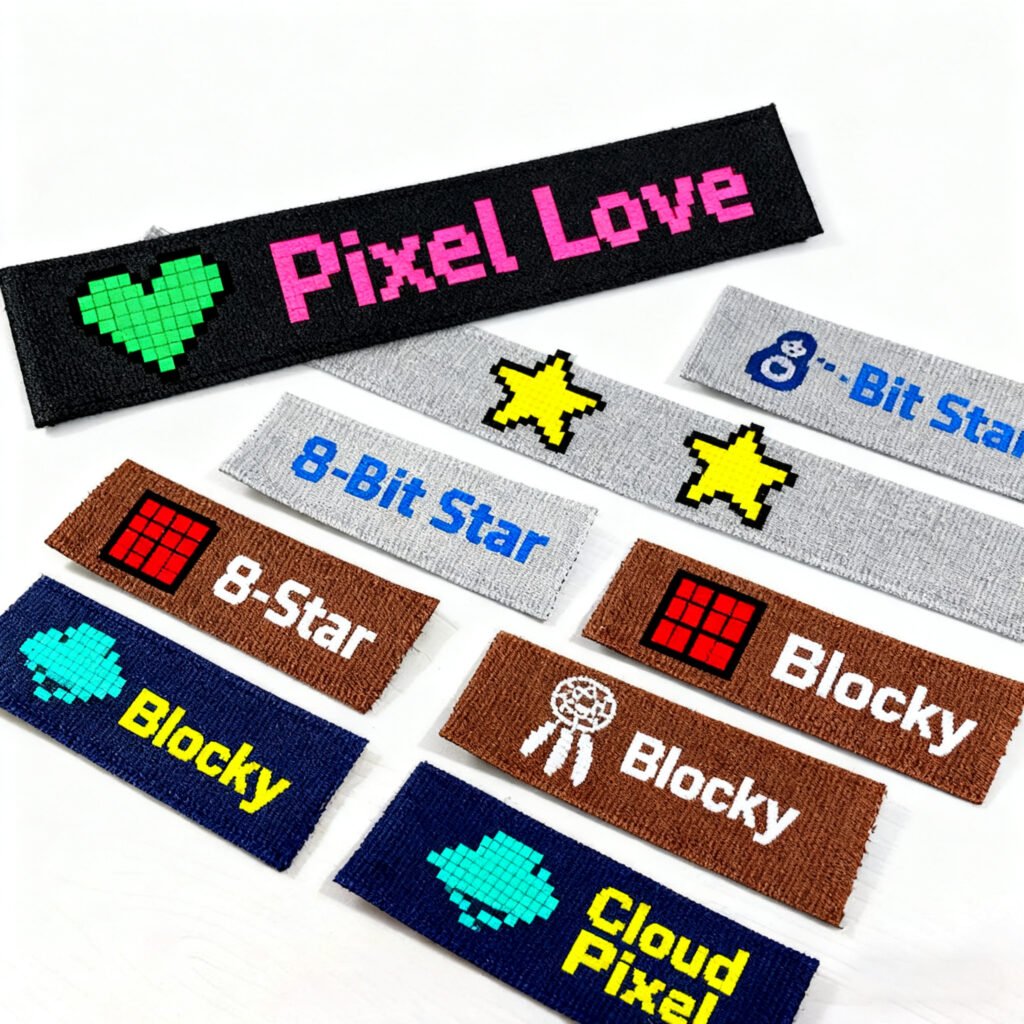
In building a brand, details don’t need to be many, but they must be worth looking at. The rule of the apparel industry is: consumers judge whether a garment is worth the price, often in the instant they open the collar. A custom label featuring customized clothing labels with exquisite material, sharp font, and comfortable touch is the brand’s silent letter of recommendation. It gives an ordinary piece of clothing one more reason for people to keep it.
Related Resources: To explore more styles and design options, please visit our main collection page for customized clothing labels.