Welcome to hykeychain.com

The Ultimate B2B Sourcing Guide to Custom Metal Fridge Magnets: Materials, Finishes, and Bulk Procurement Strategy

In the competitive global landscape of cultural tourism, municipal merchandising, premium corporate gifting, and promotional swag, custom metal fridge magnets stand out as high-margin, high-repeat-purchase staples. Unlike their PVC, rubber, or paperboard counterparts, metal magnets possess an inherent heft, a cool tactile resonance, and a lustrous finish that immediately signals collectibility and professional quality. They are the quintessential souvenir for tourists and a sophisticated touchpoint for brand marketers. However, procurement managers often encounter costly pitfalls during bulk orders: “cheap” visual finishes, premature oxidation, plating discoloration, and insufficient magnetic pull. These failures typically stem from a lack of technical knowledge regarding metallurgical processes and quality assurance protocols. This guide provides a systematic framework for sourcing custom metal fridge magnets, covering material science, process selection, critical quality checkpoints, and strategic purchasing for the North American, European, Southeast Asian, and MENA markets.
I. Core Manufacturing Processes: Matching Technique to Brand Positioning
The perceived value of a metal magnet is determined predominantly (70%) by its substrate material and surface treatment. Four mature industrial processes cater to the full spectrum of market needs, from high-end collectibles to budget-friendly promotions.
1. Zinc Alloy Die-Casting: The Pinnacle of 3D Dimension
Utilizing high-pressure injection to force molten zinc alloy into precision steel molds, die-casting excels at creating deep reliefs, multi-layered structures, intricate silhouettes, and hollowed-out details. This process captures the architectural grandeur of city landmarks, the organic flow of scenic landscapes, and the complex anatomy of licensed IP characters with unparalleled depth. It is the undisputed choice for premium tourism souvenirs, municipal anniversary editions, and high-end gift box sets, commanding the highest retail margins due to its substantial hand-feel and perceived luxury.
2. Enamel Color Filling: The Soul of Color and Texture
Enamel application is bifurcated into two distinct categories, each serving a different market tier:
• Hard Enamel (Cloisonné): Fired at temperatures exceeding 800°C, this process yields a smooth, jewelry-grade surface where the color is flush with the raised metal lines. It is exceptionally scratch-resistant and offers a subdued, sophisticated color palette reminiscent of fine porcelain. This is reserved for executive corporate gifts and “heirloom” collectibles.
• Soft Enamel: More cost-effective for volume production, soft enamel fills recessed areas with liquid paint, leaving the metal lines raised above the color surface. This creates a tactile, textured finish that catches the light dynamically. The colors are vibrant and saturated, making it the workhorse for general tourism retail, cartoon IP merchandise, and city-branded giveaways.
3. Brass/Steel Stamping: Minimalist Industrial Aesthetics
This process involves physically stamping sheet metal with custom dies to create crisp, clean outlines. It lacks the three-dimensional depth of die-casting but offers a sleek, industrial-chic retro vibe. It is ideal for minimalist logos, geometric patterns, vintage-style badges, and typographic designs. For brands targeting the Japanese, South Korean, or Scandinavian markets—where minimalist design is prized—stamped metal magnets offer a refined, understated elegance perfect for corporate gifting.
4. Printed Epoxy Dome (Photo-Magnets): The Solution for Complex Imagery
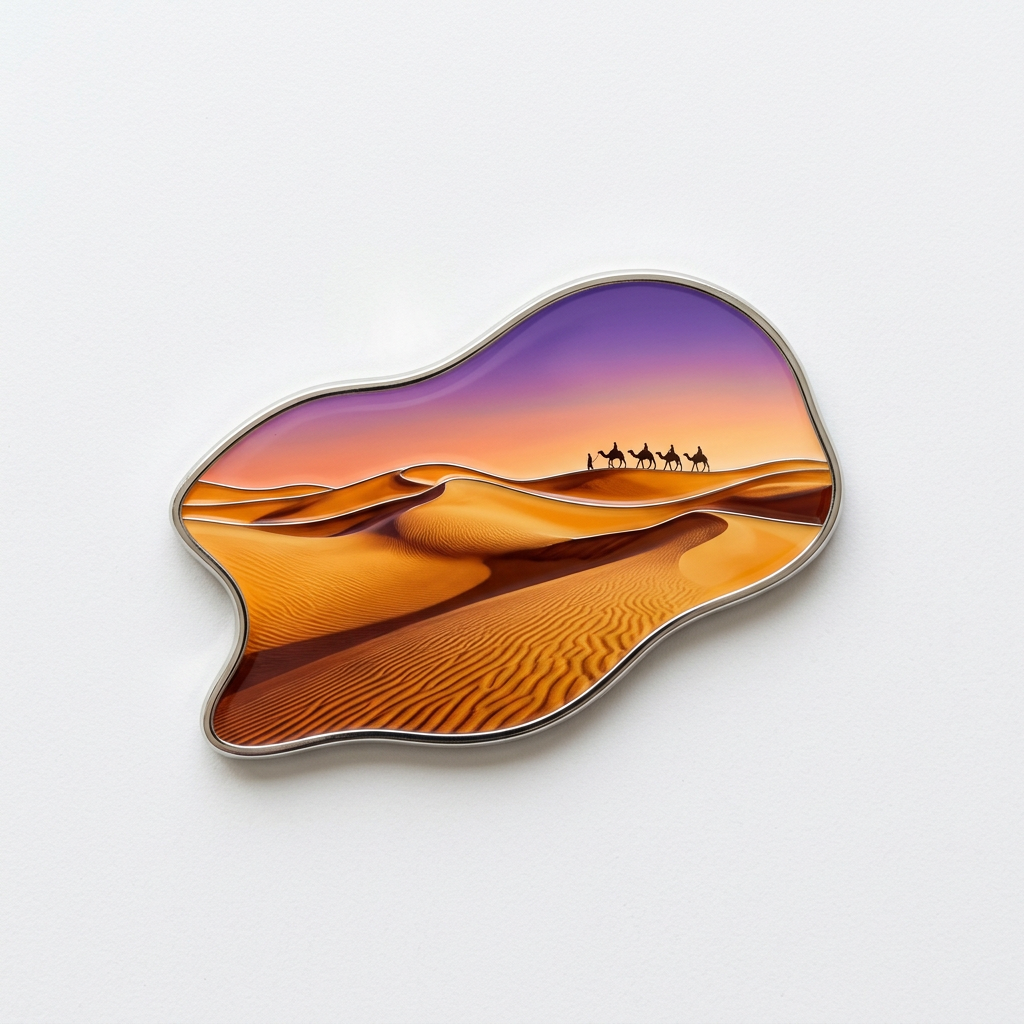
When designs involve photographic realism, gradient-heavy art, or intricate illustrations that cannot be replicated through enamel or stamping, the printed epoxy process is utilized. High-definition digital printing is applied directly to a metal substrate, followed by a precision-poured layer of clear polyurethane resin (epoxy doming). This creates a magnifying-glass effect, protecting the artwork from UV fading, scratches, and dust while providing a brilliant, glossy finish. It is the preferred choice for panoramic cityscapes and fine art reproductions.

II. Strategic Material Selection: Metal vs. PVC
A common procurement dilemma involves choosing between metal and PVC. In reality, their market positions are distinct and complementary:
• Metal Magnets: The core value proposition is “substantial weight” and “archival permanence.” They feel cold and heavy in the hand, resist abrasion, and—with proper plating—last for generations. The aesthetic is refined, professional, and vintage-leaning. They are the standard for airport gift shops, official city tourism boards, and high-end corporate welcome kits, where brand prestige justifies a higher price point.
• PVC Magnets: The core value proposition is “flexibility” and “ultra-low cost.” Made from soft rubber, they are lightweight, shatterproof, and bendable. The aesthetic is playful, cartoonish, and youthful. They are the default choice for mass-event giveaways, large-scale promotional campaigns (10,000+ units), and children’s merchandise, where broad distribution and low cost per unit are the primary objectives.
III. The Three Pillars of Quality Control
To avoid the “race to the bottom” pricing traps offered by inferior suppliers, procurement specialists must scrutinize three technical pillars:
1. Electroplating Integrity: The First Line of Defense Against Corrosion
Plating is not merely cosmetic; it is a functional anti-corrosion barrier. Reputable manufacturers offer stable finishes such as Bright Gold, Antique Bronze, and Matte Gunmetal. The critical factors are plating thickness (measured in microns) and the clear coat sealant (lacquering). A thick, evenly deposited plating layer combined with a robust sealing process prevents oxidation, resists fingerprint oils, and ensures the magnet remains tarnish-free even in humid environments like Singapore or coastal MENA regions.
2. Magnetic Strength: The Functional Core
User experience hinges on the magnet’s holding power. Neodymium (NdFeB) magnets offer superior pull force, gripping refrigerator doors securely without sliding. They are the industry standard for premium magnets. Standard rubberized ferrite magnets are thinner, more flexible, and less likely to scratch appliance surfaces, making them suitable for mid-range promotional items. Regardless of the core material, the adhesive bonding the magnet to the metal chassis must be industrial-grade, applied in a full flood coat to prevent air pockets (delamination) over time.
3. Edge Finishing and Safety: The Mark of Professionalism
The most common defect in low-quality imports is “burrs” (sharp metal flakes) along the edges. High-quality metal magnets undergo multiple stages of manual grinding and polishing to ensure edges are perfectly radiused and safe to handle. Additionally, inspect for “bleeding” (paint overflow), trapped air bubbles in enamel, and uneven epoxy domes. A flawless finish is the primary differentiator between a professional-grade product and a cheap novelty item.
IV. B2B Procurement Strategy & Global Compliance
Direct-to-Factory Sourcing: Bypassing trading intermediaries grants access to tiered volume pricing and greater production flexibility. Established factories offer complimentary design services, providing digital proofs within 24 hours and physical pre-production samples to de-risk bulk orders.
Regulatory Compliance for Export Markets:
For products destined for Western retail shelves or cross-border e-commerce (Amazon, Etsy), compliance is non-negotiable:
• RoHS & REACH: Ensures the absence of hazardous heavy metals (Lead, Cadmium, Mercury) and restricted chemicals. Mandatory for the EU and UK.
• CPSC (Consumer Product Safety Commission): Required for children’s products in the United States.
• California Proposition 65: Requires warnings for products containing chemicals known to cause cancer or reproductive harm; essential for sales in California.
• EN71-3: The European Standard for migration of certain elements, specifically for toys and children’s items.

Conclusion: Engineering Cultural Capital
A custom metal fridge magnet is more than a commodity; it is a miniature billboard for a city, a brand, or a shared memory. Its enduring market appeal lies in the intersection of material science and artistic execution. By understanding the nuances between die-casting and stamping, distinguishing between hard and soft enamel, and enforcing rigorous standards for plating and magnetism, procurement professionals can transform a simple souvenir into a high-value asset. For brands looking to penetrate diverse markets—from the luxury boutiques of Paris to the tourist hubs of Bangkok—selecting the right process is not just a manufacturing decision; it is a strategic investment in product longevity and brand equity.