Welcome to hykeychain.com

The Ultimate B2B Sourcing Guide to Custom Metal Fridge Magnets: Materials, Finishes, and Bulk Procurement Strategy

In the competitive global landscape of cultural tourism, municipal merchandising, premium corporate gifting, and promotional swag, custom metal fridge magnets stand out as high-margin, high-repeat-purchase staples. Unlike their PVC, rubber, or paperboard counterparts, custom metal fridge magnets possess an inherent heft, a cool tactile resonance, and a lustrous finish that immediately signals collectibility and professional quality.
They are the quintessential souvenir for tourists and a sophisticated touchpoint for brand marketers. However, procurement managers often encounter costly pitfalls during bulk orders: “cheap” visual finishes, premature oxidation, plating discoloration, and insufficient magnetic pull. This comprehensive guide provides a systematic framework for sourcing high-quality custom metal fridge magnets, covering material science, process selection, and critical quality checkpoints.
I. Core Manufacturing Processes for Custom Metal Fridge Magnets
The perceived value of a metal magnet is determined predominantly (70%) by its substrate material and surface treatment. Four mature industrial processes cater to the full spectrum of market needs.
1. Zinc Alloy Die-Casting
Utilizing high-pressure injection to force molten zinc alloy into precision steel molds, die-casting excels at creating deep reliefs, multi-layered structures, and intricate silhouettes.
This captures the architectural grandeur of city landmarks and complex IP characters with unparalleled depth. For custom metal fridge magnets, it is the undisputed choice for premium tourism souvenirs and high-end gift box sets, commanding the highest retail margins due to its substantial hand-feel.
2. Enamel Color Filling Techniques
Enamel application is bifurcated into two distinct categories:
- Hard Enamel (Cloisonné): Fired at temperatures exceeding 800°C, this yields a smooth, jewelry-grade surface where color is flush with the metal lines. It is exceptionally scratch-resistant, perfect for executive corporate gifts and heirloom collectibles.
- Soft Enamel: More cost-effective for volume production, soft enamel fills recessed areas with liquid paint, leaving metal lines raised. These custom metal fridge magnets offer vibrant, saturated colors ideal for general tourism retail and retail merchandise.
3. Brass and Steel Stamping
This process involves physically stamping sheet metal with custom dies to create crisp, clean outlines. It lacks deep 3D relief but offers a sleek, industrial-chic retro vibe.
For minimalist logos and geometric patterns, stamped custom metal fridge magnets offer a refined, understated elegance tailored for Scandinavian or Japanese markets.
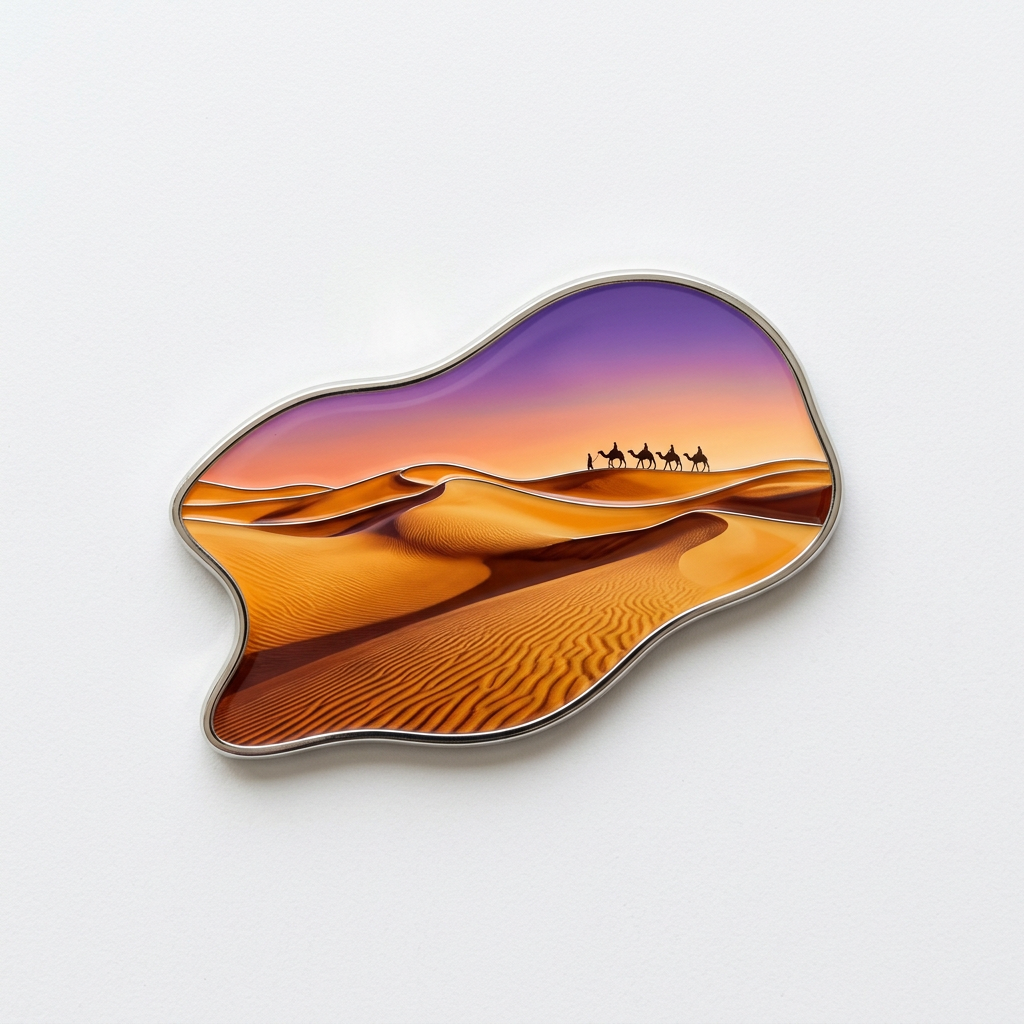
4. Printed Epoxy Dome (Photo-Magnets)
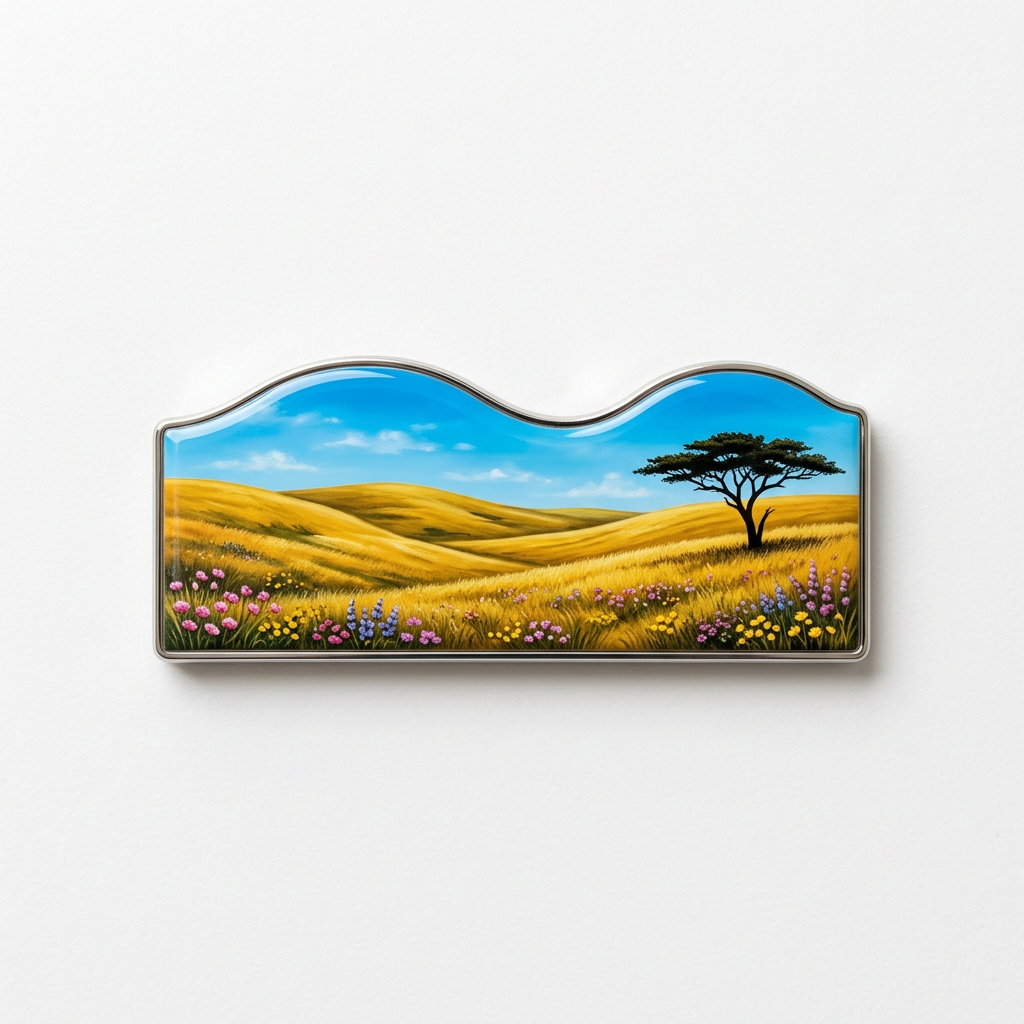
When designs involve photographic realism or gradient-heavy art, the printed epoxy process is utilized. High-definition digital printing is paired with a precision-poured layer of clear polyurethane resin.
This creates a magnifying-glass effect, protecting custom metal fridge magnets from UV fading while providing a brilliant, glossy finish for panoramic cityscapes.
II. Strategic Material Selection: Metal vs. PVC
A common procurement dilemma involves choosing between metal and PVC. Their market positions are distinct and complementary:
- Metal Magnets: The core value proposition is “substantial weight” and “archival permanence.” They feel cold and heavy, resist abrasion, and last for generations. They are the standard for premium custom metal fridge magnets in airport gift shops and corporate welcome kits.
- PVC Magnets: The core value proposition is “flexibility” and “ultra-low cost.” Made from soft rubber, they are lightweight and shatterproof, serving as the default for mass-event giveaways and large-scale promotional campaigns. If you are comparing options for large-scale giveaways, you can also explore our range of custom PVC fridge magnets for lightweight alternatives.
III. The Three Pillars of Quality Control for Custom Metal Fridge Magnets
To avoid pricing traps offered by inferior suppliers, procurement specialists must scrutinize three technical pillars:
1. Electroplating Integrity
Plating is a functional anti-corrosion barrier. Reputable factories offer stable finishes like Bright Gold or Antique Bronze. A thick, evenly deposited plating layer combined with a robust clear coat sealant prevents oxidation and fingerprint oils in humid environments.
2. Magnetic Strength
User experience hinges on holding power. Neodymium (NdFeB) magnets offer superior pull force, gripping refrigerator doors securely without sliding. Industrial-grade adhesive must be applied in a full flood coat to prevent delamination over time.
3. Edge Finishing and Safety
High-quality custom metal fridge magnets undergo multiple stages of manual grinding and polishing to ensure edges are perfectly radiused, eliminating sharp “burrs” and paint-bleeding defects.
IV. B2B Procurement Strategy & Global Compliance
Direct-to-factory sourcing grants access to tiered volume pricing. Established manufacturers offer complimentary design services and physical pre-production samples.
Regulatory Compliance for Export Markets
- RoHS & REACH: Ensures compliance with official EU RoHS and REACH environmental regulations, guaranteeing the absence of hazardous heavy metals, which is mandatory for the EU and UK markets.
- CPSC & CA Proposition 65: Critical safety and chemical warning compliance for the United States market.

Conclusion: Engineering Cultural Capital
A premium custom metal fridge magnet is more than a commodity; it is a miniature billboard for a city or a brand. By understanding material science, enforcing rigorous quality standards, and choosing the right manufacturing process, procurement professionals can transform simple souvenirs into high-value assets.